
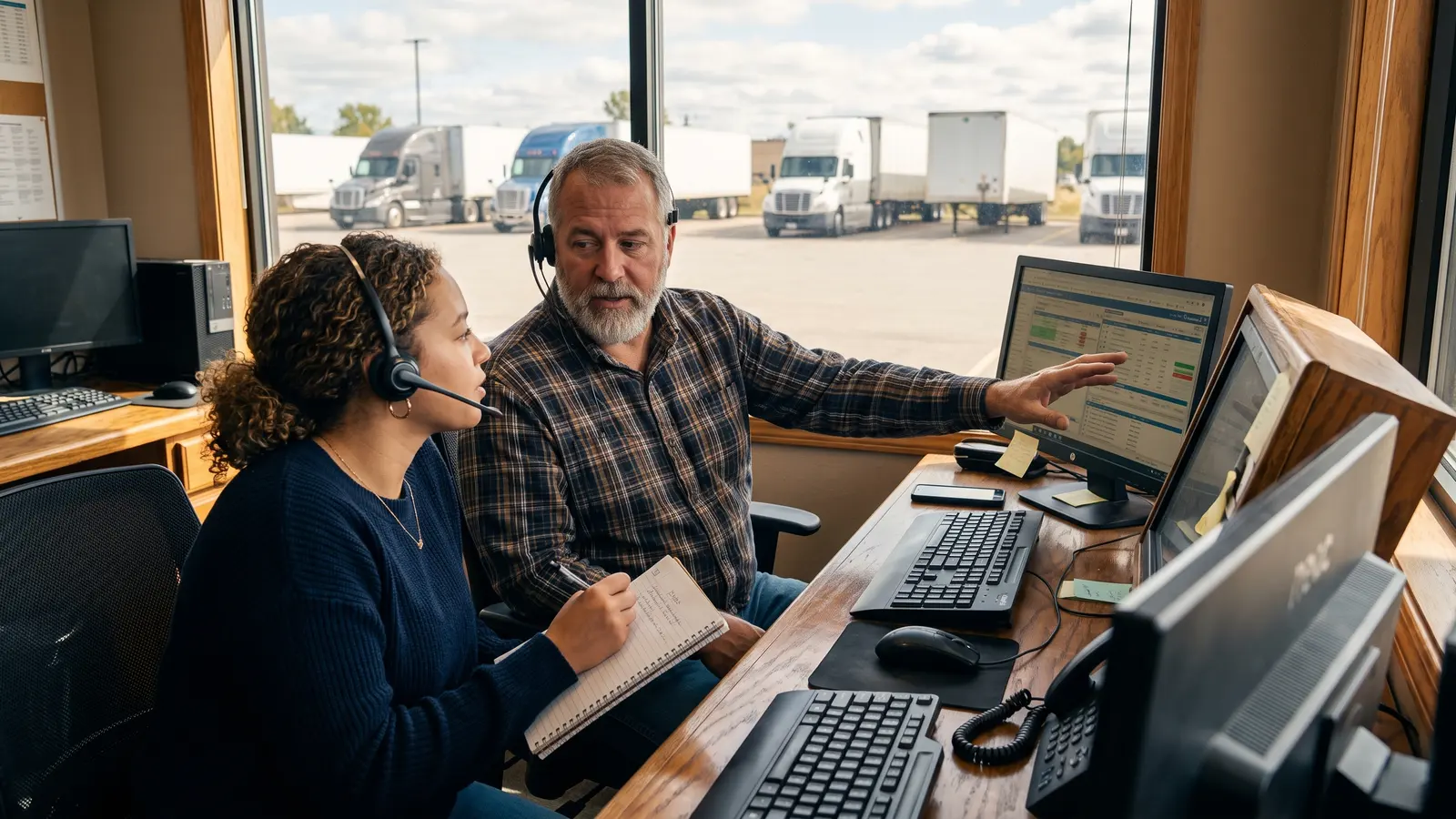
A truck dispatcher keeps trucks moving. The job takes organization, freight knowledge and steady communication with drivers, brokers and the trucking company. This guide walks through what the job involves, the skills you need, how to get trained and how to get your first experience.
Understand the job
A truck dispatcher manages the day-to-day movement of one or more trucks. The work usually includes:
- Finding loads that fit the truck, the lane and the driver's available hours
- Negotiating rates with brokers and reviewing rate confirmations
- Sending pickup and delivery details to drivers
- Tracking loads, handling check calls and solving problems on the road
- Collecting documents so the carrier can invoice or factor the load
You act as the link between the drivers on the road and the people who have freight to move.
Know where the legal line is
Before you dispatch for anyone, understand how federal rules treat this work. Under 49 CFR 371.2, a broker arranges transportation by an authorized motor carrier for compensation and must have FMCSA broker authority. A bona fide agent is part of a carrier's normal organization, works under the carrier's direction under a preexisting agreement for a continuing relationship, and doesn't decide how to allocate loads between that carrier and others. Bona fide agents are not brokers.
FMCSA has said a dispatch service can be acting as a broker when it arranges transportation for compensation and doesn't meet the bona fide agent definition. It depends on the facts. For more detail, read are truck dispatchers legal?
Build the skills you need
Good dispatchers combine a few kinds of skill:
- Organization. Several trucks, loads and appointments at once, with nothing dropped.
- Freight knowledge. Equipment types, lanes, seasonal patterns and how rates move.
- Regulations. Hours of service, the paperwork that travels with every load, and the broker and carrier rules above. The official sources are fmcsa.dot.gov and ecfr.gov.
- Communication. Clear, calm conversations with drivers, brokers and shippers, often when something has gone wrong.
- Negotiation. Knowing what a load is worth to the truck and when to turn it down.
Get trained
You can learn some of this on the job, but structured training saves time and mistakes. Freight University teaches dispatch, freight research, rate negotiation and the regulations through its Professional Logistics Service Provider (PLSP) program, a course that runs about three months, with virtual live sessions every week.
Gain experience
The fastest way to learn is to work alongside people who already do the job. Common starting points include:
- An office or dispatch role at a trucking company
- A support role at a freight brokerage
- Working with an experienced dispatcher who can review your work
Spend that time learning the dispatch and transportation management software (TMS) the company uses, and pay attention to how experienced people handle problems.
Find the right role
Dispatch jobs include in-house roles at trucking companies and positions with dispatch services. Some experienced dispatchers later start their own business. If you go that route, set it up so you work for each carrier under a written agreement and their direction. See how to become a successful truck dispatcher for the business side.
Work closely with drivers and fleet managers
Schedules only work when the people running the trucks agree with them. Learn each driver's limits and preferences, keep fleet managers informed and be flexible when plans change.
Keep the paperwork right
Dispatchers handle rate confirmations, bills of lading, proof of delivery, trip records and fuel receipts. Accurate, complete documents keep carriers compliant and make sure they get paid.
Use dispatch software well
A TMS helps you track trucks and drivers, plan routes, store load documents and adjust schedules. Learn at least one system well. If a carrier already uses one, learn theirs.
Keep learning
Rates, regulations and technology change. Stay current through official sources, industry events and training, and keep building relationships with carriers and brokers.
Next steps
If you want structured training, start at Freight University. If you're interested in day-to-day work from a home office, read how to dispatch trucks from home.
Logistical Forwarding Solutions. A carrier-first company.