The load that never pays
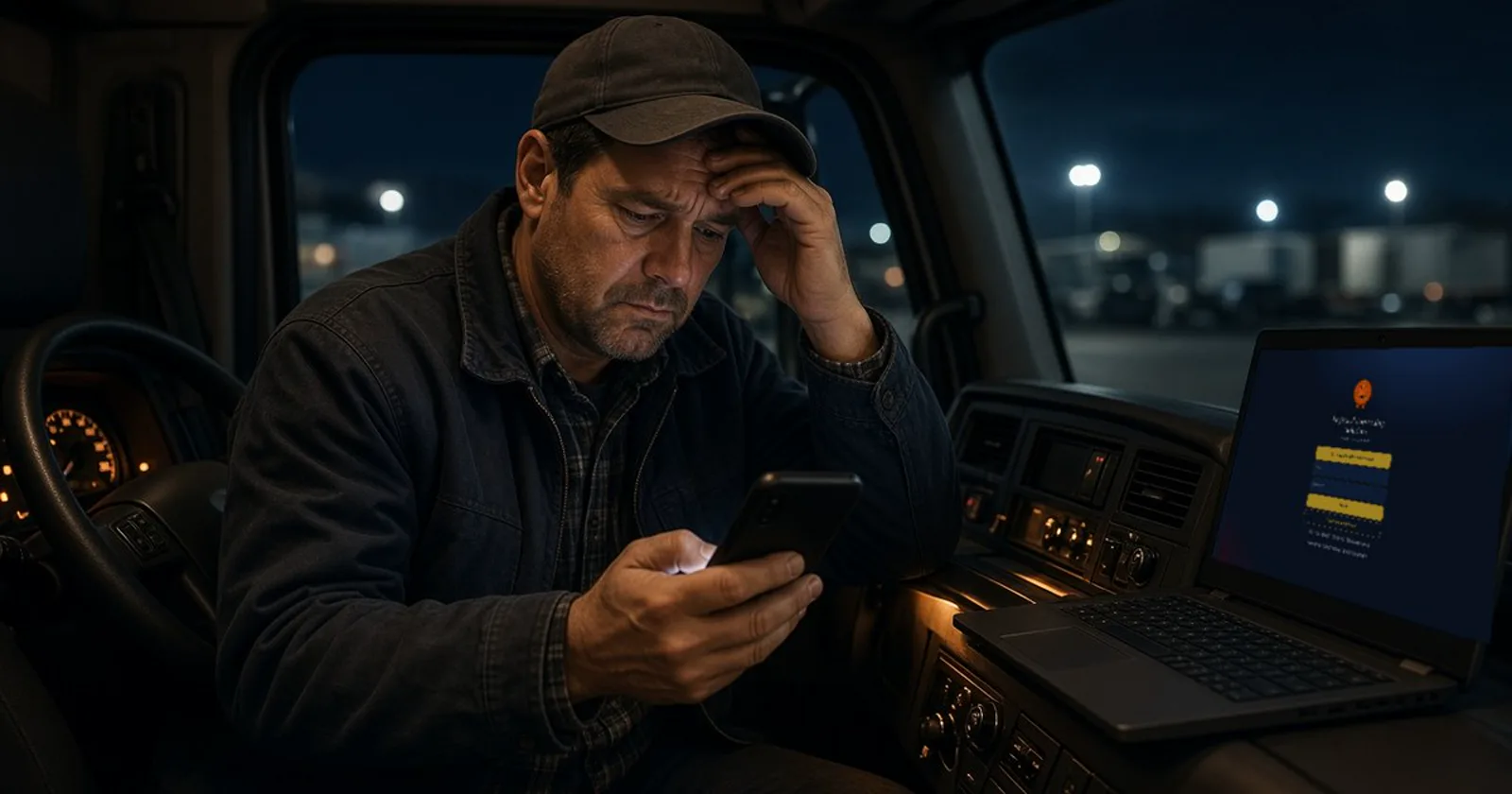
A small trucking company delivers a load. The proof of delivery is signed, the rate confirmation is clean and the driver did everything right. Then the payment doesn't come.
The broker says it paid. The factoring company says the paperwork was invalid. The phone number that answered yesterday is disconnected today. By the time the facts come out, the company that took the load is gone, and often it has already reappeared under a new name, a new MC or DOT number and a new LLC.
That pattern is what people mean by chameleon carriers and fraudulent double brokering. This article explains how both work, the warning signs you can check in public records, and where to report it.
Why small carriers feel it most
Most motor carriers in the U.S. are small fleets: owner-operators and companies running a handful of trucks. They work on thin margins with high fuel, insurance and maintenance costs.
For a company that size, one unpaid load is a serious cash flow problem. Several unpaid loads lost to the same scheme can put the business at risk. That usually isn't carelessness. Small carriers book quickly in the spot market, and fraud schemes are built to take advantage of speed.
What is a chameleon carrier?
A chameleon carrier is a trucking operation that closes one authority and opens another to get away from enforcement, debt, claims or a fraud history. The business stays the same; the registration changes.
Common signs include:
- Several DOT or MC numbers tied to the same people
- LLCs registered under family members or associates
- Authorities that sat inactive and were suddenly activated
- Addresses shared across several entities
- Phone numbers reused from a company that shut down
- Insurance that starts and stops repeatedly
When complaints or bond claims build up against one entity, it dissolves and a new one appears.
How fraudulent double brokering works
Double brokering in its fraudulent form usually goes like this:
- A legitimate load is posted.
- Someone poses as a legitimate carrier or broker and accepts it.
- They secretly reassign the load to another carrier.
- The freight moves, often with a real carrier who doesn't know what happened.
- Paperwork is altered.
- The fraudster bills and collects payment.
- The carrier that actually hauled the load isn't paid.
The shipper thinks the job is done, the original broker thinks it paid, and the carrier expects to be paid. Only the fraudster comes out ahead.
Industry groups and trade press report freight fraud losses in the hundreds of millions of dollars each year, and many losses are never reported at all.
Why small carriers are targeted
Small carriers spend more time in the spot market. They rely on load boards, quick broker onboarding and, often, factoring to keep cash moving. Fraud schemes depend on speed, urgency and trust, and most small carriers don't have a dedicated compliance staff checking every new broker.
One unpaid load can lead to:
- Missed truck payments
- Insurance cancellation risk
- Fuel card suspension
- Driver payroll delays
- Credit damage
Video: how Freight University teaches this subject
More lessons are on the Freight University YouTube channel.
Check the identity before you book
Most of the warning signs are in public records. You don't need special tools to check them. You need the habit of checking every time.
Before you book with a broker or bring on a carrier, look at:
- How long the authority has been active, and whether it was recently granted or reinstated
- Whether the address, phone number or email matches a company that was recently shut down
- Insurance that was activated, cancelled or changed in a short window
- A sudden change in safety record or inspection history
- Equipment that shows up under a different company name than it did a few months ago
- Payment terms or document requests that don't match how the company has worked before
For example, if a carrier's authority shuts down shortly after bond claims increase, and a new authority appears with the same address or officers, that's a red flag. If insurance keeps starting and stopping, ask why before you hand over a load.
None of this proves fraud on its own. It tells you where to look harder, document what you find and slow down before money or freight moves.
Document and report
When you find credible signs of fraud, put the records together first: rate confirmations, BOLs, PODs, emails, phone numbers, authority and insurance records, and a timeline. Then report through the official channels that fit the situation:
- FMCSA Complaint Center (formerly the National Consumer Complaint Database): https://complaint.fmcsa.dot.gov
- U.S. Department of Transportation Office of Inspector General: https://www.oig.dot.gov/hotline
- FBI Internet Crime Complaint Center: https://www.ic3.gov
- Federal Trade Commission: https://reportfraud.ftc.gov
- National Insurance Crime Bureau: https://www.nicb.org/how-we-help/report-fraud
If a broker hasn't paid you, double brokered your load or used your authority, you can also file a free, private complaint through FreightBrokerComplaint.com. A person reviews your evidence, an investigator contacts the broker so it can respond, and nothing is published.
Education comes first
Verification tools help, but they only work when people know what they're looking at. Freight University teaches carriers, brokers, dispatchers and logistics professionals to recognize:
- Authority red flags
- Insurance inconsistencies
- Double brokering indicators
- Altered or staged documents
How it connects
Fraud doesn't stay with one victim. When carriers are defrauded, insurance and operating costs rise, margins shrink and more companies become exposed. The response follows the same circle: check, document, report, learn and check again.
Logistical Forwarding Solutions works on the carrier side of that circle with DOT compliance services and back office support, and Freight University covers the education. Our freight fraud resources collect the checks above in one place.
Next steps
If you suspect fraud, document it and report it through the channels above. If you'd like compliance and back office support built into your operation, talk with Logistical Forwarding Solutions.
LFS also supports the Heavy-Duty Repair Transparency and Fairness Act, a proposal aimed at unfair repair pricing for small trucking companies. You can read about HD-RTFA here.
Logistical Forwarding Solutions. A carrier-first company.