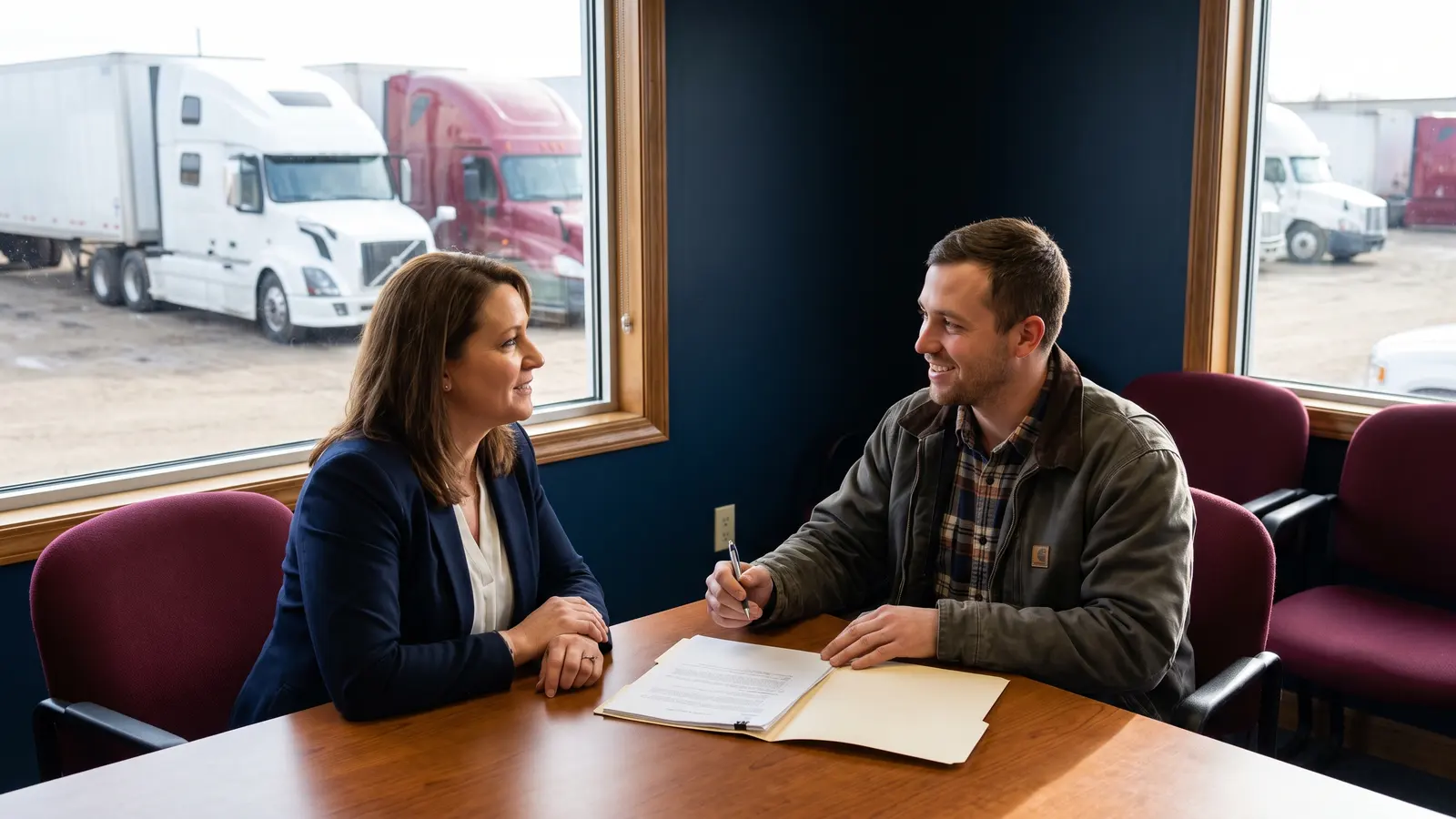
How often have you spent a late Sunday evening getting ready for the new week and wondered how your life could be simpler? Wouldn't it be nice to work from home and have more time with your family?
When I was laid off from my job, I knew I didn't want to be in that position again and wanted to make a change. I started searching for options that would make my life simpler and more rewarding, and that's when I began reading about building a freight brokerage from home. I already had some working experience in the logistics industry and found myself more and more interested in transportation, so I dug deeper and started learning the basics of how to become a freight broker.
Is becoming a freight broker a good career choice?
For a person who is motivated, a self-starter and able to manage several tasks at once, freight brokering can be a rewarding career. Even people from outside the industry can do well as freight brokers if they are dedicated to learning the business. It is still a business, though, and results vary from one person to the next.
Reasons I considered becoming a freight broker
Here are the reasons that drew me to it:
- You can start without industry experience if you're willing to study and learn.
- You don't need to buy trucks or trailers, though you do need $75,000 in financial security on file (more on that below).
- It is possible to work from home.
Before I started, I needed to know exactly what a freight broker is
A freight broker helps shippers who have freight ready to move by finding qualified carriers to haul it. Brokers arrange the transportation and track the load while the carrier hauls it. A shipper has its needs, and a carrier has its own needs and plans, from preferred routes to the type of freight each truck can handle. The freight broker is the middle person between the shipper and the carrier that will take the product to its destination.
This sounded like a good option for me, and I wanted to start right away. Next I looked at where to begin.
My 10 steps to starting a freight broker business with no experience
1. Get knowledgeable and take an online freight broker training course
The first step is to study. You need to know how the freight industry works before you can perform as a freight broker in it. An online training course can teach you how the industry operates, how to find shippers, how to work with carriers and agents, and how to manage your brokerage.
A solid freight broker training program will also show you how to price freight so the load works for you and for the carrier. It should also teach you how to stay compliant with federal rules under the FMCSA and how to run the business day to day.
2. Choose your company name and register your business
Picking a name for your brokerage is exciting. Make it unique, and choose the right type of entity for your business. Many brokers form a corporation (Inc.) or a limited liability company (LLC). Register the entity with your state, get any local business license your city or county requires, and then get your Employer Identification Number (EIN) from the Internal Revenue Service (IRS).
3. Write a business plan
Do some market research, then write a business plan that pulls together what you found. Pick a market niche (dry van, reefer, flatbed and so on) and shape your marketing to fit it. If you can, work with a business consultant or mentor to help you draft the plan.
4. Find the right carriers to work with
Your reputation as a freight broker depends on the quality of the service you provide. Find carriers that fit your niche and your customers, and make sure they are reliable. Check each carrier's authority, insurance and safety record before you tender a load. Building a network of trusted carriers is ongoing work for as long as you are in the business.
5. Apply for broker authority through FMCSA
To broker freight in your own name, you need property broker operating authority from FMCSA. You apply online through FMCSA, and the fee is $300 for each type of authority. Before your authority becomes active, you need two filings on record:
- A BOC-3 naming process agents in each state where you have an office and write contracts.
- $75,000 in financial security, either a BMC-84 surety bond or a BMC-85 trust fund (49 CFR 387.307).
Under the current rule, if claims draw that bond or trust below $75,000, your broker authority is suspended unless the security is restored within 7 business days of FMCSA's notice (49 CFR 387.307).
Once you're operating, you must keep a record of each brokered transaction for three years, and each party to a transaction may review the record of that transaction (49 CFR 371.3).
6. Arrange your $75,000 BMC-84 bond or BMC-85 trust
The bond or trust is there so carriers and shippers have a source of payment if you fail to meet your obligations under your contracts. Most new brokers use a BMC-84 surety bond and pay the surety a premium rather than setting aside the full $75,000. Ask each surety how the premium is figured and billed, and what happens if a claim is paid against your bond. See 49 CFR 387.307 for the rule itself.
7. Get the right freight broker insurance
Many shippers prefer to work with brokers who are financially sound and insured. Contingent cargo and general liability coverage are the common starting points. Get several quotes and choose the coverage that fits your business.
8. Set up your home office
To be a freight broker from home, you need some basic equipment: a computer, a printer and scanner, a smartphone or landline, office supplies and a reliable internet connection. A fax line is optional, since most paperwork is handled digitally today. Freight brokerage software (a TMS) will help you work more efficiently. Good equipment keeps your day organized and your loads moving.
9. Find a freight factoring company
Paying carriers on time while shippers take 30 days or more to pay can be tough on a new brokerage. Many factoring companies work with new brokers, and a factoring partner can help you pay carriers promptly and offer quick pay. You can learn more in our guide to partnering with a factoring company.
10. Market your freight broker business
The last step is to set up your marketing. Design a logo and simple branding, build a website that shows your knowledge and the services you offer, and print clear, well-written marketing material such as flyers and business cards. Then start reaching out to shippers and carriers.
Knowledge and patience
The key to building a freight broker business from home is knowledge and patience. Take the time to get educated and write your business plan the right way. You'll move forward with a better understanding and a solid business foundation.
If you'd like help setting up a brokerage under your own authority, see freight brokerage setup.