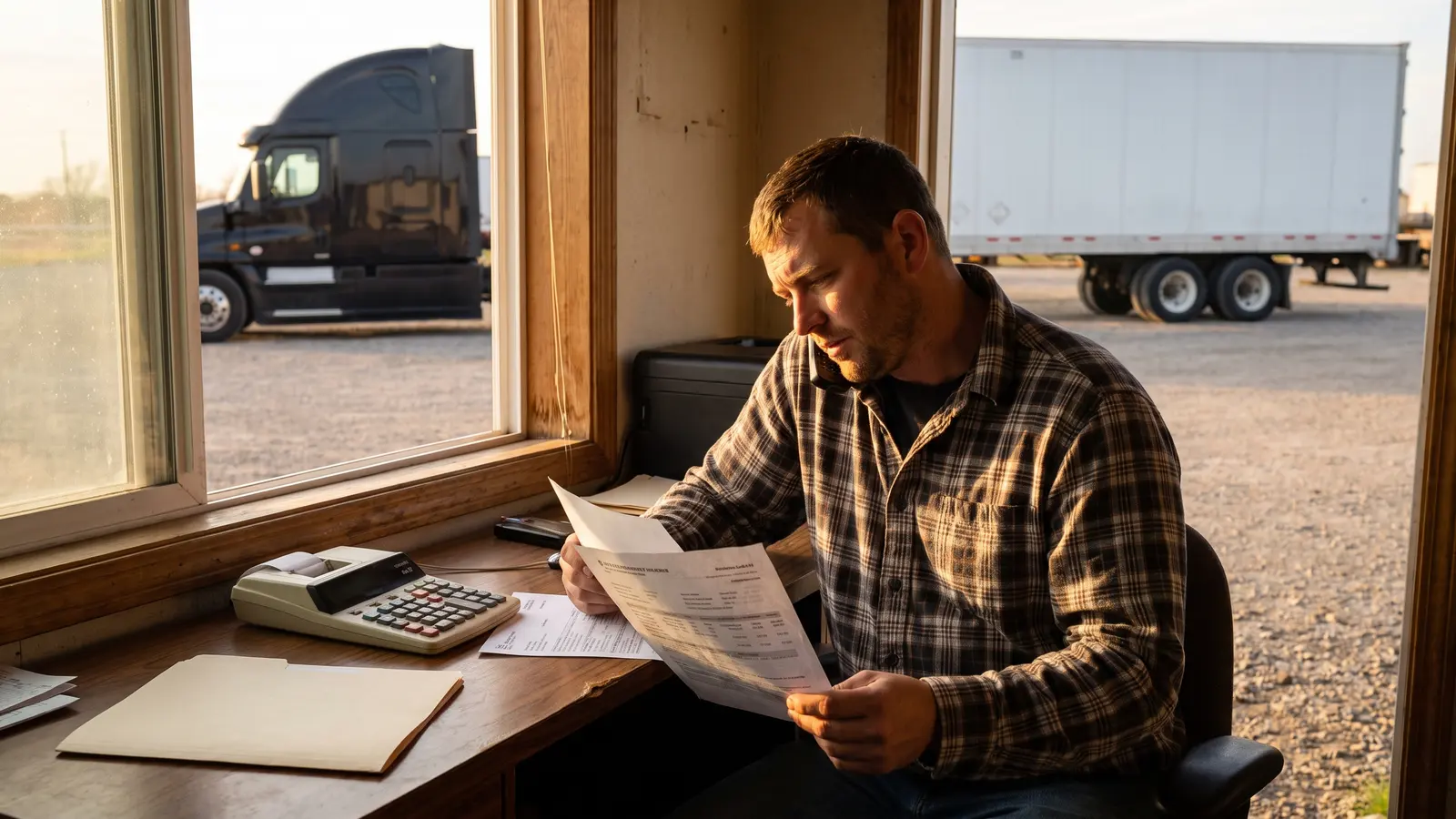

Many people starting out in trucking ask whether they'd be better off as a company driver or as an owner-operator. Owning your own truck and choosing your own loads can be appealing. Being a company driver can be just as good a fit if you drive for a company that treats its drivers well and pays them for their experience. Not having to manage federal regulations for a trucking company, or pay for maintenance on the equipment, is a big reason many drivers choose to stay company drivers.
After speaking with many drivers and owner-operators over the years, my view is that both paths can work. Starting as a company driver while you plan your own trucking company is often the steadier way to grow into the business.
Compare the same things over the same period
The most common mistake in this comparison is setting a company driver's paycheck next to an owner-operator's gross revenue. They aren't the same thing. To compare fairly, use the same time period (a month or a year works best, since many owner-operator costs are monthly, quarterly or yearly) and keep these terms straight:
- Gross revenue is what the truck bills for the loads it hauls. For an owner-operator, this is not income.
- Expenses are everything it costs to run the truck and the business: fuel, truck and trailer payments, insurance, maintenance and repairs, tires, tolls, permits and registration, fuel taxes, factoring or dispatch fees, ELD and software, and accounting.
- Owner pay is what the owner-operator takes home for their own work after expenses. It's the closest thing to a company driver's wages.
- Profit is what's left in the business after expenses and after paying the owner for their work. It's what can be saved for repairs, replacement equipment or growth.
A company driver's pay should be compared with the owner-operator's owner pay, and the company driver's benefits (health insurance, paid time off, retirement contributions, if offered) need to be added to their side of the ledger.
Reasons to be an over-the-road company driver
- A good company keeps its drivers' freight consistent, so pay is more predictable.
- Company drivers don't pay for truck maintenance and repairs, which can take a large share of revenue on a one-truck operation.
- Company drivers may receive benefits, depending on the company.
- Company drivers don't carry the business risk when freight slows, a truck breaks down or a customer doesn't pay.
- Company drivers get to learn the industry while they plan for the future.
- A steady paycheck makes it easier to save and to qualify for equipment financing later.
What an owner-operator pays for
Here are the main costs of owning and driving your own truck. Amounts vary widely depending on your equipment, credit, driving record, lanes and state, so get real quotes before you decide.
- Business filings, taxes and accounting.
- Insurance premiums for liability, physical damage and cargo, based in part on your credit and driving record.
- IFTA and IRP fees and filings.
- Factoring or invoice fees, if you factor.
- Truck and trailer payments.
- Maintenance, repairs and tires, plus downtime when the truck is in the shop.
- Fuel, tolls and fines.
- Health insurance for yourself and your family, or going without it.
There's also lost revenue to plan for: when the truck is down for repairs, it doesn't earn, but the payments and insurance are still due.
Building toward ownership while driving
Some company drivers buy their first truck while still driving for a company, and lease that truck onto a carrier under a written lease with a hired driver. If you go this way, the lease has to follow the federal leasing rules in 49 CFR Part 376, and you'll be responsible for the truck's payments, maintenance and driver whether or not it's moving. A steady income from driving makes it easier to qualify for financing and to carry the truck through slow weeks. Equipment finance companies generally like to see slow, steady growth. LFS offers consulting for drivers thinking through this step.
Which is better off?
There isn't one answer. A one-truck owner-operator may take home more than a company driver in a good stretch, and less, or nothing, in a stretch with a breakdown, slow freight or a customer who doesn't pay. A company driver gives up some upside in exchange for a steadier paycheck, possible benefits and no business risk. Many in the industry find that one truck alone leaves little room for error, and that having more than one truck can spread the fixed costs, though it also adds risk.
If you want to grow into owning trucks one day without driving them yourself, starting with a good small trucking company and learning the business from the inside is a sound way to begin. For more on building a trucking company business, or to talk through your plans, contact us.
Logistical Forwarding Solutions. A carrier-first company.