
Fishing and logistics have something in common. Both take patience. You don't jerk the line at the first nibble; you wait, watch and move with precision when the moment is right. And in both, the water looks calm until it isn't.
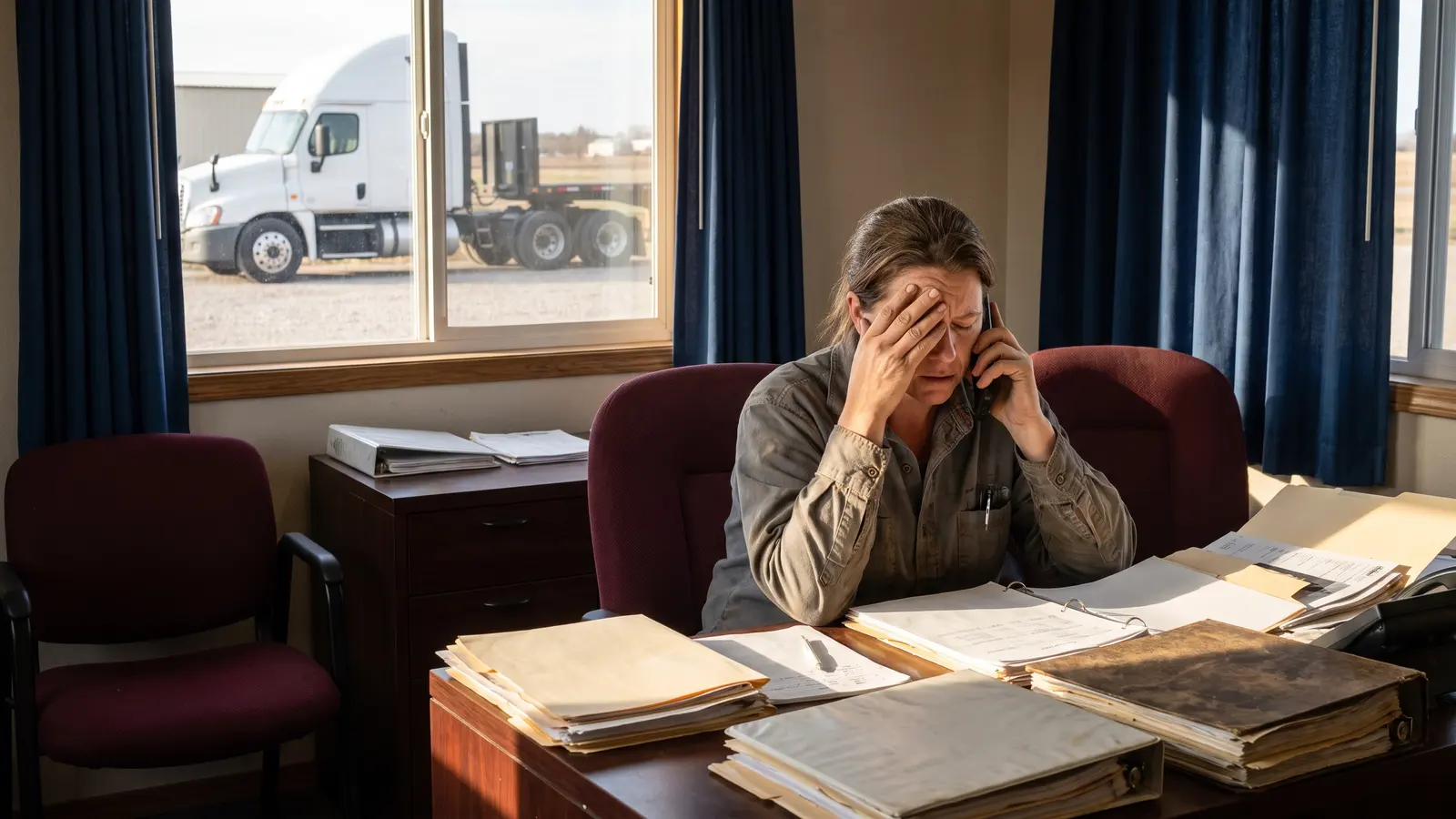
Small trucking companies face the same five threats again and again: fraud, insurance problems, driver issues, starting in the wrong order, and cash flow. Any one of them can sink a carrier that isn't prepared. In a single recent week, our team ran into all five. Here's what each one looks like and how to handle it with systems instead of luck.
1. Freight fraud
Fraud in logistics has changed. Carriers aren't dealing with petty thieves anymore; they're dealing with organized groups, some of them overseas, that treat the U.S. freight system as an easy target. Double brokering, identity theft, altered BOLs and forged PODs are everyday risks.
In that one week, our verification checks flagged close to ten suspicious contacts. Without those checks, any one of them could have cost a carrier a load's worth of revenue or more. The companies most exposed are one-truck carriers and new authorities, who are often moving fast and checking less.
Red flags to watch for
- Free email accounts. Be very cautious if a "broker" contacts you from a Gmail, Yahoo or other free email account. Most brokerages use their own domain. If the company is ABC Logistics, expect an @abclogistics.com address, and confirm it matches the contact details in FMCSA records.
- Handing out your documents too freely. Your MC and DOT numbers are public, but you don't need to make it easy for someone to copy your business. Send authority documents and W-9s only to brokers you've checked, and through their verified contact details.
- A rate that's too good to be true. A high rate with no negotiation is a common lure. Once the freight moves, the money can be gone.
How we handle it
When something looks wrong, our team traces the pattern, checks the documents, cross-references authority and insurance records, and builds a clear file. Where it's warranted, we report it through official channels such as the FMCSA, the DOT Office of Inspector General, the FBI and the Department of Homeland Security. Many of these schemes are run by repeat offenders who recycle identities and authorities, so a clean, documented file is what makes enforcement possible.
If a broker hasn't paid you, double brokered your load or used your authority, you can file a free, private complaint through FreightBrokerComplaint.com. A person reviews your evidence, an investigator contacts the broker so it can respond, and nothing is published. Our freight fraud resources cover the checks above in more detail.
2. Insurance problems
The second threat wears a suit and speaks in policy numbers. Many carriers don't realize how much their insurance shapes daily operations: which loads they can take, which drivers they can hire, what their costs look like.
That same week, we worked through misquoted premiums, delayed refunds and policy changes made after the policy was already bound. Catching them took a line-by-line review. Treat your insurance the way an auditor would:
- Read every policy, endorsement and renewal before you sign.
- Compare the quote with the bound policy and the invoice.
- Question every change you didn't ask for, in writing.
- Keep a file of every certificate, endorsement and email.
3. The driver standard
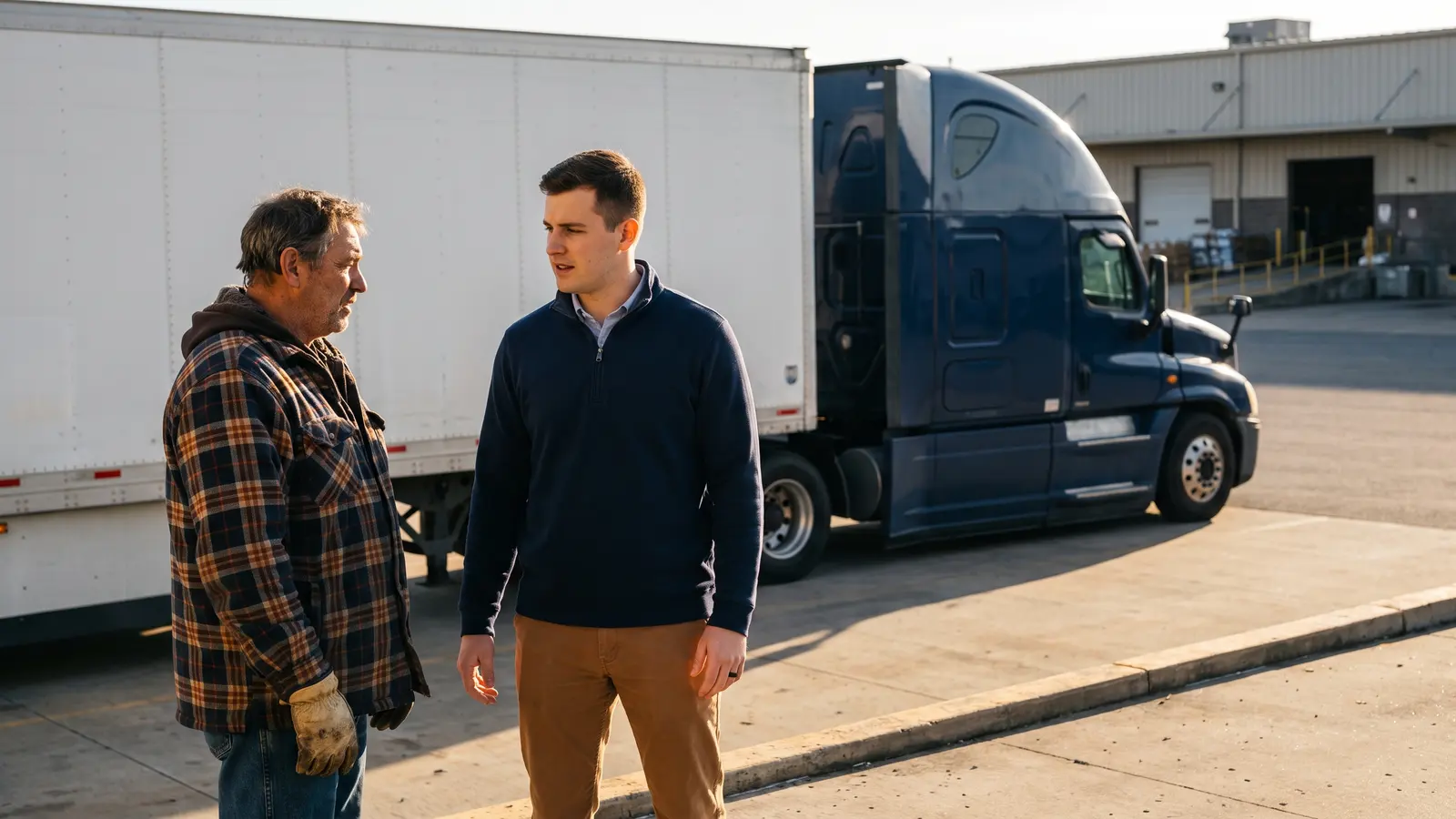
If you don't manage your driver program, it will manage you. Drivers are professionals and key partners in the business. Their safety record shapes your CSA scores, your insurance rates and, in the end, whether the company lasts.
Sometimes the right decision is to make a hard change. We once replaced an entire group of drivers and rebuilt with people who shared our standards. It was costly in the short term, and less costly than keeping the wrong team. Set clear expectations, document them, and act when they aren't met.
4. Starting in the wrong order
Many new trucking companies start backwards. They focus on the truck before they understand the business, and put tens of thousands of dollars into equipment before they've spent an hour building the systems that keep that truck working.
The truck isn't the business. It's a tool.
The business lives behind the scenes: the back office that controls cash flow, the dispatch discipline that decides whether miles are profitable, the compliance that keeps your authority and insurance in good standing, and the freight research that decides whether you're building steady lanes or chasing spot-market loads.
What happens when the truck comes first
You buy the truck. Then you scramble for insurance, a dispatcher, freight and cash flow. Meanwhile, the fixed costs don't stop. Truck payments, insurance and fuel are due whether you're ready or not. One bad week becomes two. One paperwork mistake becomes a late payment. With everything tied up in equipment, there's no room for patient decisions, and you end up taking any rate on any lane from any broker just to keep going.
Build the system first
A system-first company knows where its freight will come from before it buys the truck. It knows how loads will be dispatched, how paperwork flows, how drivers are trained, how compliance is maintained and how cash gets collected.
Systems create control. Control creates consistency. Consistency keeps you in business.
That's why experienced operators put education, compliance, dispatch workflows, freight research and financial controls in place first. If you're starting out, our start a trucking company page walks through that order.
5. Cash flow
The last threat is the quiet one. The wheels are turning and loads are moving, so everything seems fine. Underneath, money is leaking: a missing signature on a BOL, a blurry POD photo, a funding partner who goes silent when you need it, or a broker who uses a paperwork technicality to hold your money for weeks while your fuel bill is due now.
You can have plenty of revenue on paper and an empty bank account.
In that same week, we found gaps in our own documentation flow. We fixed them by tightening every step: auditing our paperwork, aligning our funding partners and closing the gaps where revenue was slipping. The goal is a process tight enough that you can deliver one day and submit clean paperwork the same day. If your billing process is disorganized, fix that before anything else.
Our back office services and dispatch services are built around exactly these steps.
A better way forward
These lessons are expensive to learn the hard way. Freight University offers free training based on real situations from the road and the office. Before you make a costly mistake, spend some time learning how the business works.
If this was useful, please share it with a driver, dispatcher or fleet owner you know. And if you'd like help putting these systems in place, talk with Logistical Forwarding Solutions. We are a carrier-first company.