
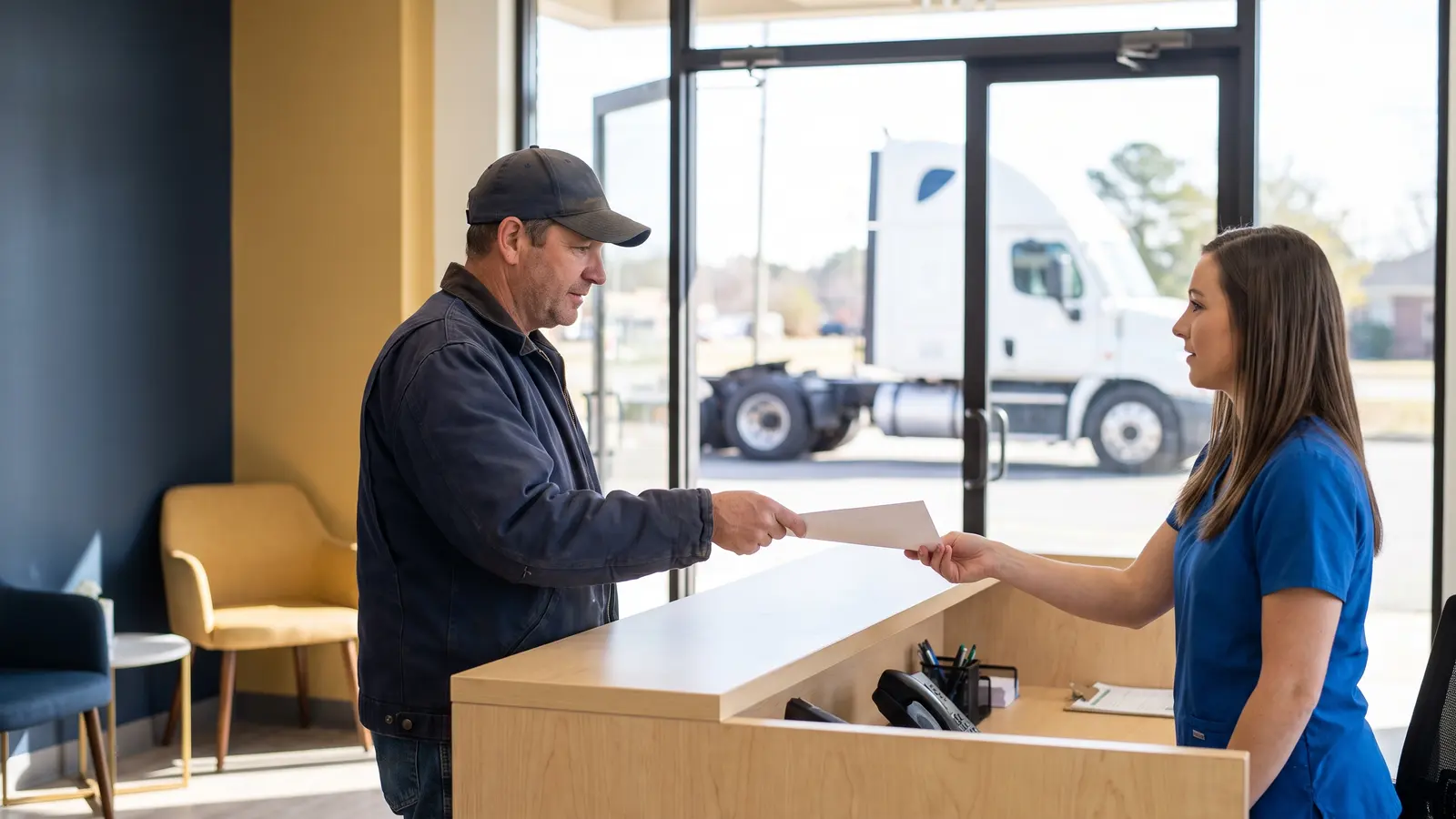
Your DOT drug and alcohol testing program, set up and managed
A DOT drug and alcohol testing program is one of the first things an investigator checks and one of the easiest things to let slip. We help you set up and manage your program, so the policy, the random pool, the tests and the Clearinghouse records stay current.
What a DOT drug and alcohol testing program has to include
49 CFR Part 382 sets the drug and alcohol testing rules for motor carriers and their drivers. A program is more than an account with a lab. It is a set of written rules, tests, queries and training records that has to keep running all year, whether you have one driver or twenty.
The core pieces:
- Written policy. Each driver gets your policy and educational materials (49 CFR 382.601).
- Pre-employment test. A driver may not perform safety-sensitive work until you have a verified negative drug test result (49 CFR 382.301).
- Random testing. For 2026, the minimum annual random testing rates for FMCSA-regulated employers are 50% for drugs and 10% for alcohol (DOT ODAPC).
- Clearinghouse queries. A full pre-employment query before hiring, and at least one query a year for each driver you employ (49 CFR 382.701).
- Supervisor training. At least 60 minutes on alcohol misuse and 60 minutes on controlled substances use for anyone who supervises drivers (49 CFR 382.603).
For a new carrier the stakes are plain. Having no drug and alcohol testing program, or no random testing program, fails a new entrant safety audit automatically (49 CFR 385.321).
What we help you set up
We handle the paperwork and the tracking, so the program keeps running between audits.
Written policy
We prepare your written drug and alcohol policy, get it to each driver with the educational materials, and keep the signed receipts on file.
Random testing
We help you get your company and drivers into a random testing program and keep the roster current as drivers come and go.
Pre-employment tests
We help schedule the test for each new hire and confirm the verified negative result before the driver is dispatched.
Clearinghouse registration and queries
We help you register in the Clearinghouse, then run pre-employment and annual queries with your authorization and track when the next ones are due.
Supervisor training
Anyone who supervises drivers needs reasonable-suspicion training. We provide it and keep the certificates.
Program records
Policy receipts, test results, query records and training certificates, kept in one organized file that is ready for an audit.
Owner-operators need a program too
If you run under your own authority and drive your own truck, you are both the employer and the driver. Part 382 has a specific rule for you: an owner-operator who employs himself as a driver must designate a consortium/third-party administrator to report to the Clearinghouse on his behalf (49 CFR 382.705(b)(6)).
We help you set that up, walk you through the designation in the Clearinghouse, and keep your test and query records in one place.
- Make the required Clearinghouse designation
- Get into a random testing program
- Keep test and query records together
How LFS sets up your program
Review what you have
We look at your current policy, testing records, results and Clearinghouse account, if you have them.
Fill the gaps
Whatever is missing, we help you put in place. If parts of your program already work, we build on them.
Policy and driver receipts
Your written policy goes to every driver with the educational materials, and we file the receipts.
Enroll and test
Drivers go into the random pool, and new hires are scheduled for pre-employment tests before their first load.
Clearinghouse setup
We help you register, make the C-TPA designation if you are an owner-operator, and run the queries that are due.
Ongoing management
We track random selections, annual queries, new hires and supervisor training, and remind you before anything comes due.
Backed by education
Our help with your drug and alcohol testing program is backed by the education we created at Freight University. We use education, data, technology and academics to stay on top of the newest FMCSA rules and regulations. You don't get one person. You get a team, a platform and a network with up-to-date information, making sure it's done the right and correct way. How we work.
- Current on the newest FMCSA rules
- A team, a platform and a network behind you
- Done the right and correct way
Check the whole program at once
Not sure where your program stands today? A mock audit reviews it alongside your driver qualification files, logs and maintenance records, and gives you a written list of gaps. We are a carrier-first company, so the goal is to find problems on your schedule, not an investigator's.
Questions and answers
Do owner-operators need a DOT drug and alcohol testing program?
Yes. A carrier with no random testing program fails a new entrant safety audit automatically (49 CFR 385.321), and an owner-operator who employs himself must designate a consortium/third-party administrator to report to the Clearinghouse (49 CFR 382.705(b)(6)).
What are the DOT random drug and alcohol testing rates?
For 2026, the minimum annual random rates for FMCSA-regulated employers are 50% for drugs and 10% for alcohol (DOT ODAPC).
Can you help if I already have a testing program?
Yes. We review what you have, help fix what is missing and keep the records organized so the program holds up in an audit.
When does a new driver need a drug test?
Before any safety-sensitive work. You need a verified negative pre-employment drug test result first (49 CFR 382.301), plus a full pre-employment Clearinghouse query (49 CFR 382.701).
How often do I have to query the Clearinghouse?
Run a full query before you hire a driver, and query at least once a year for each driver you employ (49 CFR 382.701).
Related
DOT compliance services for trucking companies
Most small carriers don't lose their authority because they can't find freight. They lose it because they can't show an investigator the records that prove the company…
Supervisor reasonable-suspicion training
If you supervise CDL drivers, federal rules require training before you can order a reasonable-suspicion test.
How to onboard a new truck driver, step by step
Knowing how to onboard a new truck driver the DOT way keeps a good hire from turning into an audit problem.
New entrant safety audit preparation
Every new interstate carrier gets a new entrant safety audit. We help you get your records in order before it happens, and if the audit doesn't go your way, we help you…
DOT mock audits: find gaps before the investigator does
A mock audit is a practice run. We ask for the same records an FMCSA investigator would, check them against the regulations, and give you a written list of what's…
Driver qualification files done right
Every carrier must keep a qualification file for every driver it uses. The file shows the driver was checked before the first load and is still qualified today.
How we work: backed by education
Everything we do at Logistical Forwarding Solutions is backed by education. Your company is managed by LFS, and behind LFS is Freight University: students, interns and…
Set up or fix your drug and alcohol program
Tell us how many drivers you have and what testing you have in place now. We'll tell you what's missing and how we can help.
Prefer the phone? Call 901-205-9679.
Sources
- 49 CFR Part 382 — Controlled substances and alcohol use and testing
- 49 CFR 382.301 — Pre-employment testing
- 49 CFR 382.601 — Employer obligation to promulgate a policy
- 49 CFR 382.603 — Training for supervisors
- 49 CFR 382.701 — Drug and Alcohol Clearinghouse queries
- 49 CFR 382.705 — Reporting to the Clearinghouse
- 49 CFR 385.321 — Safety audit: Failure
- DOT ODAPC — Random testing rates
- FMCSA Drug and Alcohol Clearinghouse