
How managed truck ownership works
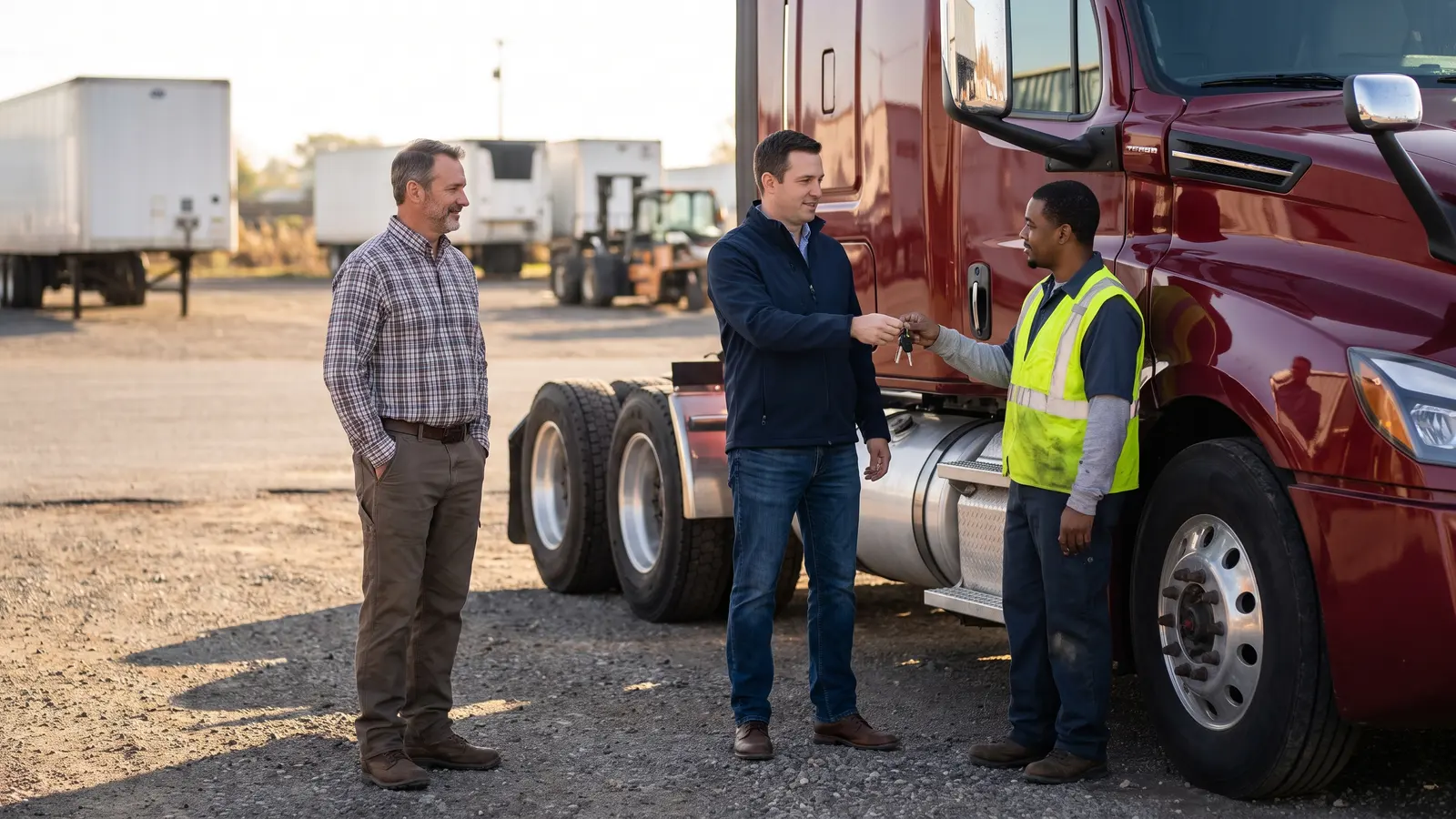
Managed truck ownership splits the work. You own the truck. It is placed with a trucking company in the LFS network and runs under that company's operating authority, and LFS runs the day-to-day operation under a written management agreement.
Three parts, one truck
Your role as owner. You buy the truck and hold the title. You pay for the truck and its upkeep, and you make the owner's decisions: approving major repairs, replacing equipment, or ending the arrangement.
The network trucking company. Your truck is placed with a trucking company LFS has built or is building in the LFS network. The truck runs under that company's own operating authority, its USDOT and MC numbers. The authority belongs to that company, not to you and not to LFS.
Our role as manager. LFS does the daily work of running the truck: the driver, the freight, the compliance, the maintenance schedule, the billing and the reporting. We are a management company. We do not hold your money for investment and we hold no ownership in your truck.
The management agreement puts these roles in writing: what we do, which network company the truck runs with, how revenue and expenses are handled, what we charge, how reporting works, and how either side can end it. Read it with your own attorney and accountant before you sign.
From first call to a working truck
Talk it through
It starts with a call with LFS. Some people already own a truck and want it managed. Others want to buy one. The conversation is different for each, and either way it comes before any purchase.
Choose the right truck
We help you think through equipment that fits the freight our network trucking companies run: 53-foot dry van, reefer and power only, 80,000 lb CDL freight. If you want help buying, our commercial truck sales broker service can help. You pay for the truck and it is titled to you.
Sign the management agreement
Duties, charges, reporting and how to end the arrangement are written down and agreed before the truck goes to work.
Set up the paperwork
Before the first load, the truck is placed with a trucking company in the LFS network, and the insurance, permits, placement paperwork and records are put in place. The agreement states which company the truck runs with and under whose operating authority.
Put a qualified driver in the seat
We recruit, screen and hire a CDL-A driver for the network trucking company and build the driver qualification file the federal rules require.
Run, report, review
The truck works, we manage it, and you get a weekly report. When something needs an owner's decision, we bring it to you.
What we do week to week
Dispatch and freight research
We research lanes, check brokers and rates, and book loads that make sense for the truck and the driver.
Driver management
Hours of service, logs and the driver file are kept to the rules in 49 CFR Part 395 and Part 391.
Maintenance coordination
We schedule preventive maintenance and repairs and keep the inspection and maintenance records required by 49 CFR Part 396.
Back office
Invoicing, collections, paperwork and fuel-tax records, so loads turn into money in the bank.
More people on your equipment
The company running your truck has education behind it: students, interns and academics from Freight University, managed by LFS. Your equipment is monitored, worked and improved by a team, and with education behind it, your investment is more secure.
What you see in the weekly report
The report is the honest picture of your truck. Bad weeks show up as plainly as good ones. If a number looks wrong, ask. We would rather explain it than have you guess.
- Loads run and lanes worked
- Revenue for each load
- Expenses: fuel, repairs, maintenance and other costs
- Management charges under the agreement
- Downtime and the reason for it
- What's coming: inspections, renewals and repairs
How this compares with other ways to own a truck
- Leasing your truck to a carrier. You sign a lease with a motor carrier and the truck runs under that carrier's authority. Federal leasing rules in 49 CFR Part 376 require the lease to be in writing.
- Running it yourself. You hire the driver, find the freight and keep the compliance. If you are asking how to hire a driver for your semi truck, this is the path where that job is yours.
- Managed ownership. You own the truck, it runs with a trucking company in the LFS network under that company's authority, and LFS runs the daily operation under one agreement.
Some programs call this kind of arrangement turnkey trucking. We don't, because the word suggests you can set it and forget it. You can't. None of these paths is free of risk, so read the risks and the FAQ before you choose.
Read the risks before you decide
Freight rates, repairs, fuel, insurance and driver turnover all affect what a truck earns, and an owner can lose money.
Related
Managed truck ownership with LFS
You buy and own the truck. It runs with a trucking company in the LFS network, under that company's authority, and we manage it under a written agreement.
Risks of owning a truck, in plain words
Owning a semi truck can lose money. Good management lowers some risks. It cannot remove them, and we would rather you read this page before you call us than after you…
Managed truck ownership: questions and answers
Straight answers to the questions people ask most about owning a truck that LFS manages.
Commercial truck sales broker
LFS brokers the purchase and sale of commercial semi trucks. We help buyers find a truck that fits their freight and budget, and help sellers move a truck to a buyer who…
Driver qualification files done right
Every carrier must keep a qualification file for every driver it uses. The file shows the driver was checked before the first load and is still qualified today.
More than dispatch: logistics support for your trucking company
Our dispatch service is 8% of the gross of each load, and it is more than dispatch.
How we work: backed by education
Everything we do at Logistical Forwarding Solutions is backed by education. Your company is managed by LFS, and behind LFS is Freight University: students, interns and…
Ask us how this would work for you
Tell us whether you own a truck now or plan to buy one. We'll reply to set up a call.
Prefer the phone? Call 901-205-9679.
Nobody will ask you for money on a web form. This form only asks for a conversation.