
Driver qualification files done right
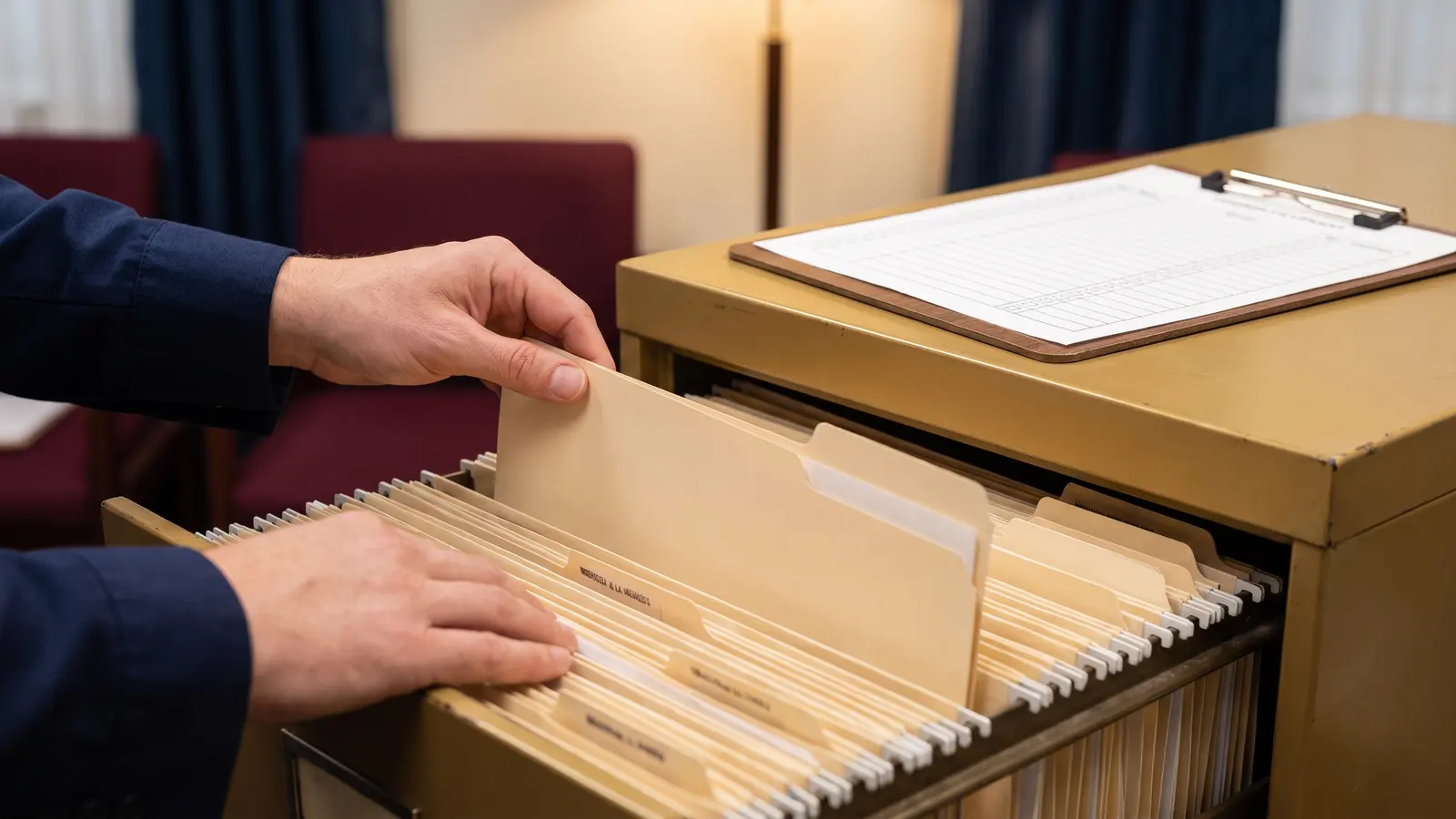
Every carrier must keep a qualification file for every driver it uses. The file shows the driver was checked before the first load and is still qualified today. We build those files, find what's missing, and keep the dates from slipping.
Why the DQ file carries so much weight
When an investigator opens your files, the driver files usually come first. Two of the violations that fail a new entrant automatically are about drivers: using a driver without a valid CDL, and using a driver who is not medically qualified (49 CFR 385.321). Driver file problems found at roadside also feed the Driver Fitness category in your CSA scores.
A complete file is also how you show a broker, shipper or insurer that you hire carefully. For a small carrier, one bad hire can end the company.
What goes in a driver qualification file
Under 49 CFR 391.51(b), the file holds:
- The driver's signed employment application (391.21)
- The motor vehicle record from each state that licensed the driver in the past three years, obtained within 30 days of hire (391.23)
- The road test certificate, or an accepted equivalent license or certificate (391.31, 391.33)
- The annual motor vehicle record (391.25)
- A note of the annual driving record review, with the reviewer's name and the date (391.25)
- The medical examiner's certificate or, for CDL drivers, the medical certification information required under the current rule, plus any medical variance (391.43, 391.51)
- A note verifying the medical examiner was listed on the National Registry, where required
- A Skill Performance Evaluation certificate or medical exemption document, if the driver has one
The second file and the dates that keep running
Some pre-employment checks belong in a separate driver investigation history file. Within 30 days of hire, you must ask the driver's DOT-regulated employers from the past three years about the driver's safety history, and check their drug and alcohol history. For FMCSA-regulated employers, that drug and alcohol check now runs through the Drug and Alcohol Clearinghouse (49 CFR Part 391, Subpart C).
After hire, the clocks keep going:
- Every 12 months: a new MVR from each licensing state and a documented review (391.25).
- At least once a year: a Clearinghouse query for every driver subject to testing (382.701). Since November 18, 2024, a driver in prohibited status in the Clearinghouse also loses CDL privileges at the state until the return-to-duty process is finished (FMCSA Clearinghouse).
- Whenever the medical card runs out: proof of a new medical certification. For CDL drivers, medical certification now moves electronically from the examiner to the state. FMCSA’s temporary relief that let carriers and drivers rely on a paper certificate for up to 60 days ended October 11, 2026, except for Alaska-issued CDL and learner’s permit holders (Federal Register), so for most CDL drivers the medical status on the state driving record is what counts. We check the current rule when we build each file.
The file stays for as long as the driver works for you and three years after. Some items, such as old annual MVRs and expired medical certificates, may be removed three years after they were done (391.51(c)–(d)).
How our DQ file service works
Inventory
We list every driver you have used and match each one to a file, including drivers who left in the last three years.
Gap report
Driver by driver, we show what is missing, out of date or done wrong, with the regulation behind each item.
Build or repair
We help you request the missing records and put each file in a consistent order, digital or paper, so it can be produced quickly.
Keep the calendar
We track MVR, review, Clearinghouse and medical card dates so you hear about them before they are late, not after.
Backed by education
Our help with driver qualification files is backed by the education we created at Freight University. We use education, data, technology and academics to stay on top of the newest FMCSA rules and regulations. You don't get one person. You get a team, a platform and a network with up-to-date information, making sure it's done the right and correct way. How we work.
- Current on the newest FMCSA rules
- A team, a platform and a network behind you
- Done the right and correct way
Hiring a driver soon?
The file starts before the first load. Our article walks through hiring a driver in order, from application to first dispatch.
Questions and answers
I'm an owner-operator with my own authority. Do I need a file on myself?
In most cases, yes. When you drive under your own authority, you are both the carrier and the driver, and the qualification rules still apply. We can set up your own file the same way we would for an employee.
Can the files be digital?
Yes, as long as you can produce complete, legible records when asked. Whatever the format, use the same order in every file so anyone can find a document quickly.
A driver left two years ago and the file is incomplete. Can it be fixed?
You can't create records after the fact or backdate anything. What we can do is document what exists, gather what can still be obtained honestly, and make sure your current files are complete.
Related
Your DOT drug and alcohol testing program, set up and managed
A DOT drug and alcohol testing program is one of the first things an investigator checks and one of the easiest things to let slip.
How to onboard a new truck driver, step by step
Knowing how to onboard a new truck driver the DOT way keeps a good hire from turning into an audit problem.
DOT compliance services for trucking companies
Most small carriers don't lose their authority because they can't find freight. They lose it because they can't show an investigator the records that prove the company…
DOT mock audits: find gaps before the investigator does
A mock audit is a practice run. We ask for the same records an FMCSA investigator would, check them against the regulations, and give you a written list of what's…
Supervisor reasonable-suspicion training
If you supervise CDL drivers, federal rules require training before you can order a reasonable-suspicion test.
13 Steps to Hiring a New Truck Driver the Right Way
How to hire truck drivers the right way: a 13-step checklist covering the driver application, PSP inquiry, MVR, medical card and drug testing.
Foreign Commercial Driver License Requirements in the US: FAQs
Foreign CDL requirements in the US, answered: reciprocity with Canada and Mexico, English proficiency, non-domiciled CDLs and hazmat for Canadian drivers.
How we work: backed by education
Everything we do at Logistical Forwarding Solutions is backed by education. Your company is managed by LFS, and behind LFS is Freight University: students, interns and…
Get help with driver files
Tell us how many drivers you use now and how many left in the last three years. We'll explain what a file review involves.
Prefer the phone? Call 901-205-9679.
Sources
- 49 CFR 391.51 — General requirements for driver qualification files
- 49 CFR Part 391, Subpart C — Background and character (391.21, 391.23, 391.25)
- 49 CFR Part 382, Subpart G — Drug and Alcohol Clearinghouse (382.701 queries)
- 49 CFR 385.321 — Safety audit: Failure
- FMCSA Drug and Alcohol Clearinghouse
- FMCSA National Registry — waiver on paper medical examiner's certificates (July–October 2025)
- Federal Register, Oct 8, 2026 — NRII paper medical certificate relief ends Oct 11, 2026 (renewed only for Alaska-issued CDL/CLP holders)
- FMCSA Clearinghouse — Clearinghouse II and CDL downgrades (Nov 18, 2024)