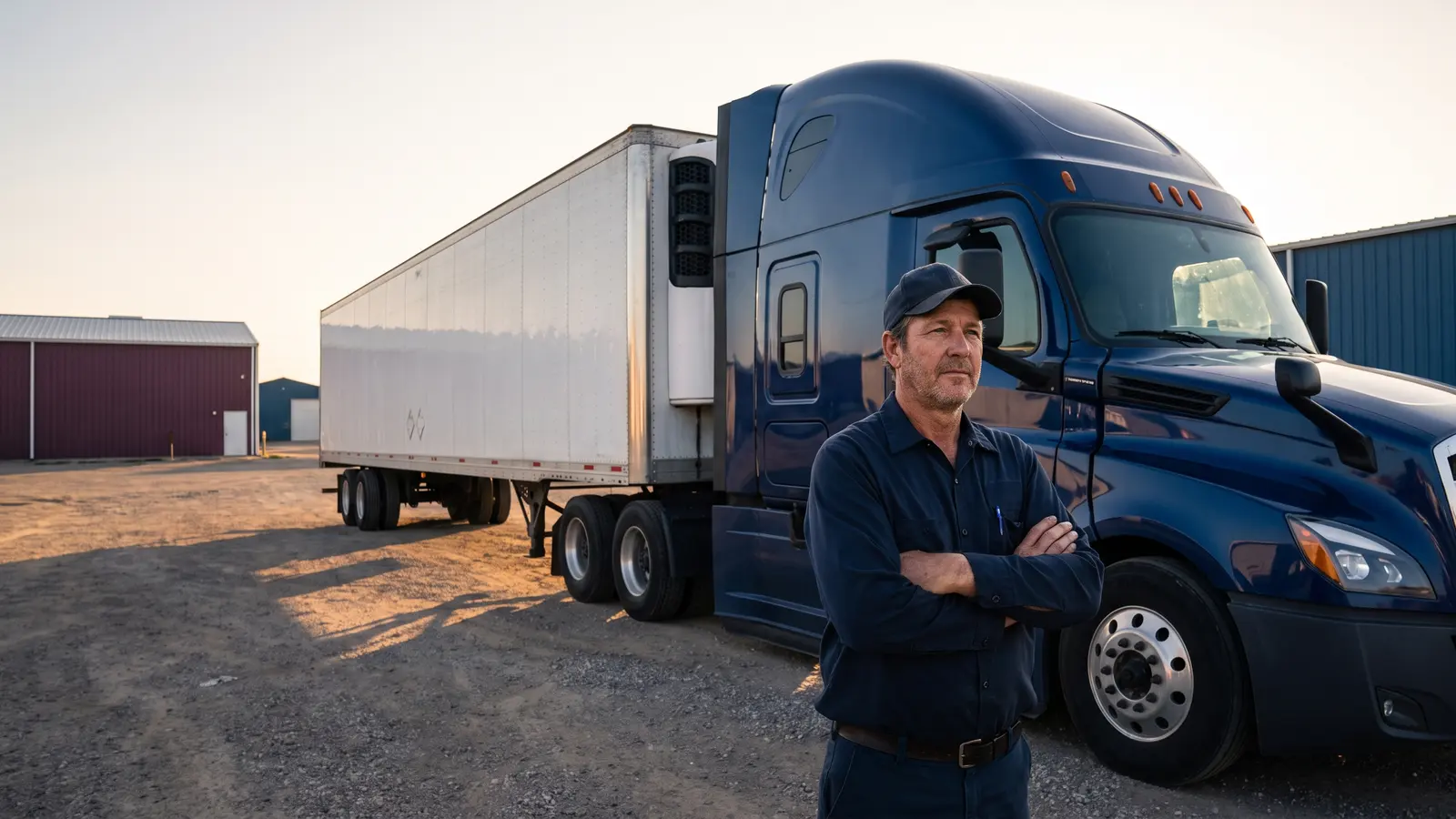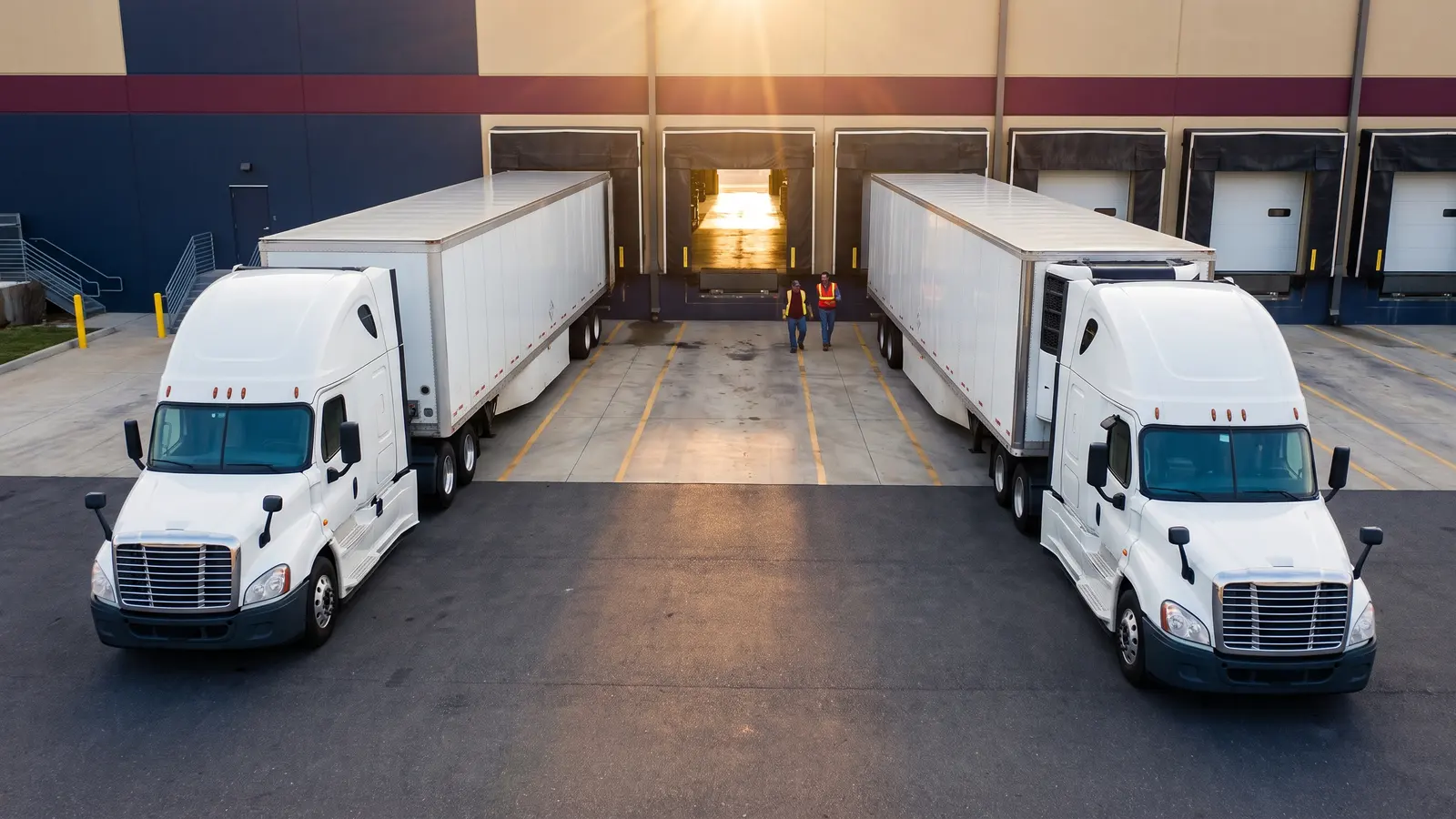
Dry van is the widest and easiest freight market for a new trucking company, and also the most crowded. Reefer, short for refrigerated, usually pays more per mile, but it costs more to run and asks more of the driver. Neither is better on its own. The freight in your area decides which one fits your company.
Here is how the two compare, with current numbers.
The freight chooses the equipment
Before anything else: don't pick a trailer because someone online says it pays more. Research the freight first. Which lanes run out of your area? What do they pay? How often would you come home empty? The industry chooses the equipment, and the equipment chooses the industry you work in. Get that order wrong and you'll own a trailer that doesn't fit the freight around you.
Dry van vs. reefer at a glance
| Dry van | Reefer | |
|---|---|---|
| What it hauls | Packaged goods, paper, retail, building products, anything that doesn't need temperature control | Produce, meat, dairy, frozen food, beverages, pharmaceuticals |
| Spot rate, Sept. 2026 (national average, before fuel) | $2.17 per mile | $2.70 per mile |
| Equipment cost | Lower | Higher: the trailer plus a refrigeration unit |
| Running cost | Lower | Higher: reefer fuel and unit maintenance |
| Risk | Lower | Temperature claims, tighter appointments |
| Driver demand | Standard | Temperature checks, food-grade loading, more paperwork |
| Can haul the other's freight | No | Yes, a reefer can haul dry freight |
Rates are DAT's national spot averages for September 2026 (DAT). That month, reefer paid about 53 cents a mile more than dry van on the spot market. On contract rates with fuel, the gap was smaller: $3.58 for reefer against $3.24 for dry van.
Why reefer pays more, and what it costs you
The extra rate pays for extra cost and risk:
- Reefer fuel. The refrigeration unit burns its own fuel, separate from the truck.
- Unit maintenance. A reefer unit is another engine to service and repair.
- Temperature claims. If the load warms up, you can lose the whole shipment's value. Your cargo coverage has to include spoilage.
- Tighter schedules. Food receivers run strict appointments, and late can mean rejected.
- Washouts and pre-cooling. The trailer has to be clean and at temperature before you load.
- More driver work. Checking temperatures, recording them and keeping the seal on the load intact.

ATRI's latest operating cost study found that truckload and reefer carriers both averaged operating margins below 1% in 2025 (ATRI). The higher reefer rate does not mean a higher profit. It means a different business.
Why dry van is often the starting point
Dry van has the most freight and the most brokers moving it. A new carrier can find loads, learn the paperwork and build a record with less equipment risk. The trade-off is competition: every new authority is chasing the same dry van loads, so rates on many lanes stay tight.
Why reefer can make sense
Reefer freight tends to be steadier through the year because people eat every day. Food moves even when retail slows down. A reefer can also haul dry freight when reefer loads are thin, so you have more options to stay loaded. If the freight near you is produce, protein or frozen food, reefer may be the better business, as long as your cash can carry the higher costs.
Power only: the third option
Power only means you pull trailers that belong to someone else, usually a shipper's or carrier's trailer pool. You don't buy a trailer at all. It lowers your startup cost, but your freight depends on steady access to those trailers.
How to decide
- Research your lanes. What freight leaves your area, and what freight brings you home?
- Run your cost per mile for each option with real quotes for equipment and insurance. See how to figure your cost per mile.
- Check your cash. Reefer costs more up front and to run. See what it really costs to start a trucking company.
- Be honest about the work. Reefer asks more from the driver every load.
- Pick one trailer type and a couple of strong lanes, and learn them well before you add anything else.
How LFS helps
The trucking companies LFS builds and manages run 53-foot dry van, reefer and power only freight at 80,000 pounds. We are a carrier-first company, and our freight research looks at the lanes in your area before you buy anything. Starting out? Begin with how to start a trucking company and how to start a trucking company with one truck.
Sources
Questions and answers
Does reefer pay more than dry van?
Usually. In September 2026, DAT's national spot average was $2.70 a mile for reefer and $2.17 for dry van before fuel. Reefer also costs more to run, with reefer fuel, unit maintenance and temperature claims, so a higher rate isn't a higher profit.
Is dry van or reefer better for a new trucking company?
Dry van has the most freight and the least equipment risk, but the most competition. Reefer pays more and stays steadier through the year, but costs more and asks more of the driver. Research the freight in your area first. The freight decides the equipment.
Can a reefer trailer haul dry freight?
Yes. A reefer trailer can haul dry freight with the unit off, which gives a reefer carrier more options when refrigerated loads are thin. A dry van can't haul temperature-controlled freight.
What is power only trucking?
Power only means you pull trailers owned by a shipper or another carrier instead of buying your own. It lowers startup cost, but your freight depends on steady access to those trailer pools.
Logistical Forwarding Solutions. A carrier-first company.