You can start a trucking company with one truck. A lot of trucking companies in America are small, and plenty of them started with one owner and one truck. To do it right, you research the freight first, set up the business, get your own operating authority and insurance, put your compliance in place before the first load, and keep enough cash to survive the wait to get paid.
With one truck, you are the owner, the driver, the dispatcher and the back office. Every decision lands on you. Here is the order we walk new owner-operators through.
Step 1: Research the freight before you buy anything
Most new trucking companies start with the truck. That is backwards. The freight decides everything after it: the equipment, the lanes, the insurance and how often you get home.
Before you spend money, find out:
- Which lanes run out of your area and what they pay.
- How often you would run empty coming back (deadhead).
- Whether dry van, reefer or power only fits the freight near you.
- How seasonal that freight is.
Understanding the industry comes before buying equipment. Our freight research service exists for exactly this, and dry van vs. reefer walks through the equipment choice.
Step 2: Decide between your own authority and leasing on
You have two ways to run one truck:
- Lease onto an existing carrier. You run under their authority and insurance, usually for a percentage of the load. You learn the business with less risk, but less control.
- Get your own authority. You run under your own USDOT number and operating authority. You keep more of each load, and you carry all of the cost and all of the compliance.
There is no shame in leasing on first. Many owner-operators learn the freight, the paperwork and their real costs that way before they go out on their own. If you go on your own, keep reading.
Step 3: Set up the business
Form your LLC or corporation, get your EIN from the IRS (it's free), and open a business bank account. Keep every dollar of the trucking company separate from your personal money from day one. It makes your taxes, your IFTA returns and any future financing far easier.
Step 4: Apply for your USDOT number and operating authority
You apply in FMCSA's online registration system. It now requires identity verification and a Login.gov account before you can create your company account and apply (FMCSA).
- You need a USDOT number to run interstate in a vehicle of 10,001 pounds or more.
- You need operating authority to haul other people's freight across state lines for pay. Authority is still issued with an MC docket number, and the fee is $300 per authority type.
- After your application is published in the FMCSA Register, there is a 10-day protest period (49 CFR 365.115).
- Your insurance filing and your BOC-3 (process agents in every state) must be on file within 20 days of that publication.
Plan on several weeks from application to active authority. Our operating authority page covers each piece, and our Motus registration help page covers FMCSA's new system.
Step 5: Get insured before your authority goes active
You need at least $750,000 in public liability for general freight. Brokers will also want cargo coverage, and your lender will want physical damage coverage if the truck is financed. Insurance is usually the largest early bill for a one-truck company. See owner-operator insurance cost per month and our commercial truck insurance page.
Step 6: Put compliance in place before the first load
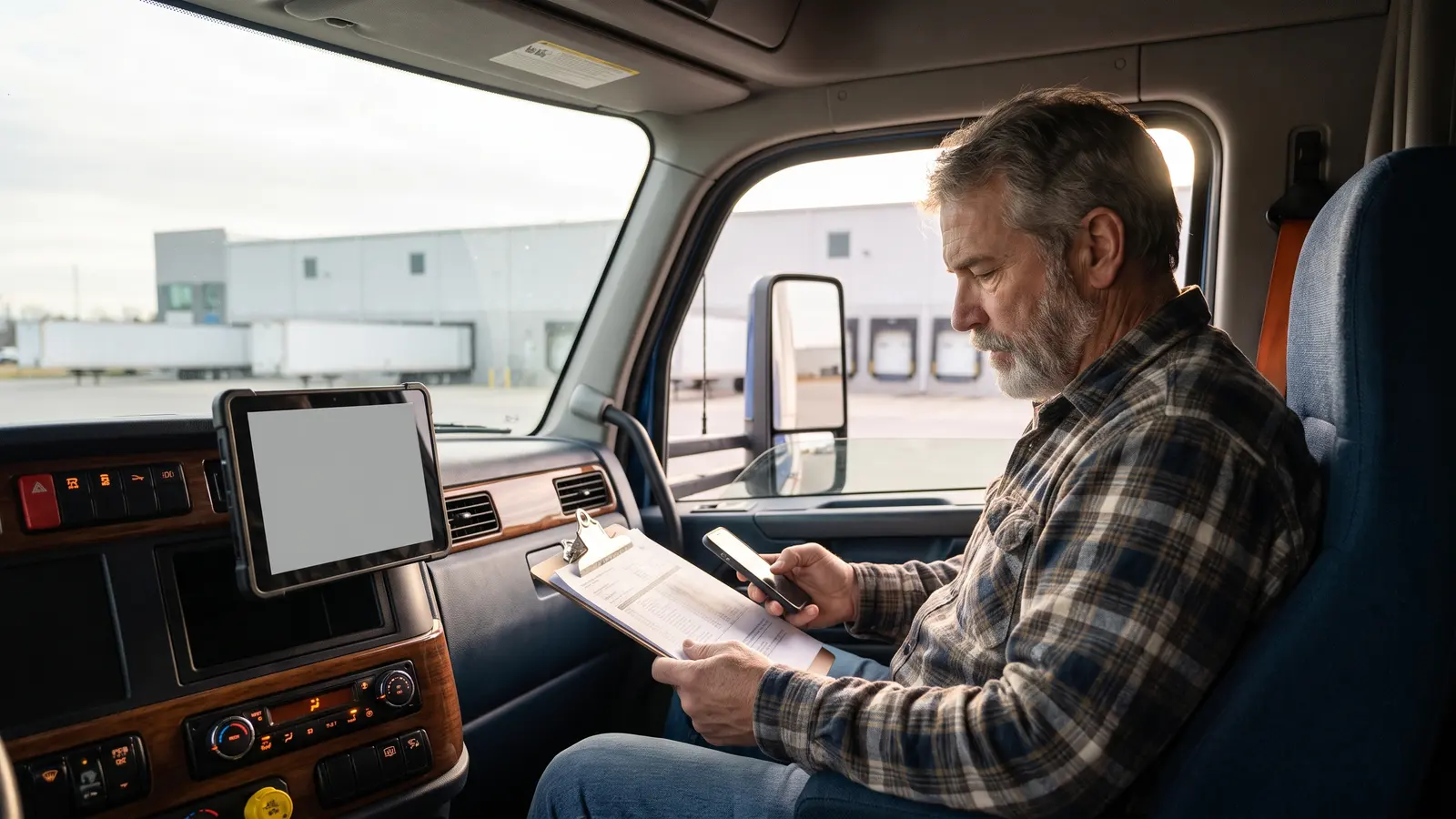
As a one-truck owner-operator, you are also your own safety department. Before you haul, you need:
- A drug and alcohol program. An owner-operator who isn't leased to a carrier must belong to a consortium for random testing and register in the Drug and Alcohol Clearinghouse (FMCSA).
- A driver qualification file on yourself: application, motor vehicle record, medical card and road test or CDL.
- An ELD from FMCSA's registered list.
- Maintenance records and an annual inspection for the truck and trailer.
- State and tax registrations: UCR, IRP plates, IFTA and Form 2290.
These records are exactly what FMCSA reviews in your new entrant safety audit within your first 12 months.
Step 7: Know your cost per mile and find freight that covers it
Before you accept a single load, know what it costs you to run each mile, loaded or empty. Then know the rate you need to stay open. How to figure your cost per mile walks through the math.
New authorities often start on load boards because many brokers won't use a carrier with brand-new authority. That's normal. Your goal is to build past it: a few trusted brokers, then direct shippers. How owner-operators find loads lays out that plan.
What one truck really means
One truck means one point of failure. A blown turbo, a bad week of rates or a slow-paying broker hits your whole company at once. A few habits keep one-truck companies alive:
- Keep a repair reserve. Put money aside every week, before you pay yourself.
- Stay with one trailer type and a couple of strong lanes. Learn them well before you add anything.
- Watch cash flow every week, not every month.
- Measure everything: cost per mile, revenue per mile, deadhead percentage, fuel per week, on-time delivery and maintenance cost. What you don't measure will eventually collapse.
Grow to a second truck when the first one is paying for itself and you have the reserve to carry two.
How LFS helps one-truck owner-operators
We are a carrier-first company. LFS helps owner-operators start a trucking company in the right order and run it after: dispatch services, freight research, DOT compliance and back office services. If you want to see what it costs first, start with what it really costs to start a trucking company.
Sources
- FMCSA: Registration
- FMCSA: Get authority to operate (MC number)
- 49 CFR Part 365: Rules governing applications for operating authority
- 49 CFR Part 387: Minimum levels of financial responsibility
- FMCSA: Owner-operators and consortium membership
- 49 CFR Part 382: Controlled substances and alcohol use and testing
- 49 U.S.C. 31144: Safety fitness of owners and operators
Questions and answers
Can you start a trucking company with one truck?
Yes. Many trucking companies in America run one truck. You need your own USDOT number and operating authority, at least $750,000 in liability insurance for general freight, a drug and alcohol program, an ELD, your state registrations and enough cash to carry the weeks before you get paid.
Should a new owner-operator lease on or get their own authority?
Leasing onto a carrier lets you learn the freight and your real costs with less risk and less control. Your own authority lets you keep more of each load, and you carry all of the cost and compliance. Many owner-operators lease on first.
How long does it take to get trucking authority?
Plan on several weeks. After your application is published, there is a 10-day protest period, and your insurance filing and BOC-3 must be on file within 20 days of publication before the authority can go active.
Does an owner-operator need a drug and alcohol consortium?
Yes. FMCSA says an owner-operator who isn't leased to a motor carrier must belong to a consortium for random testing and must register in the Drug and Alcohol Clearinghouse.
Logistical Forwarding Solutions. A carrier-first company.