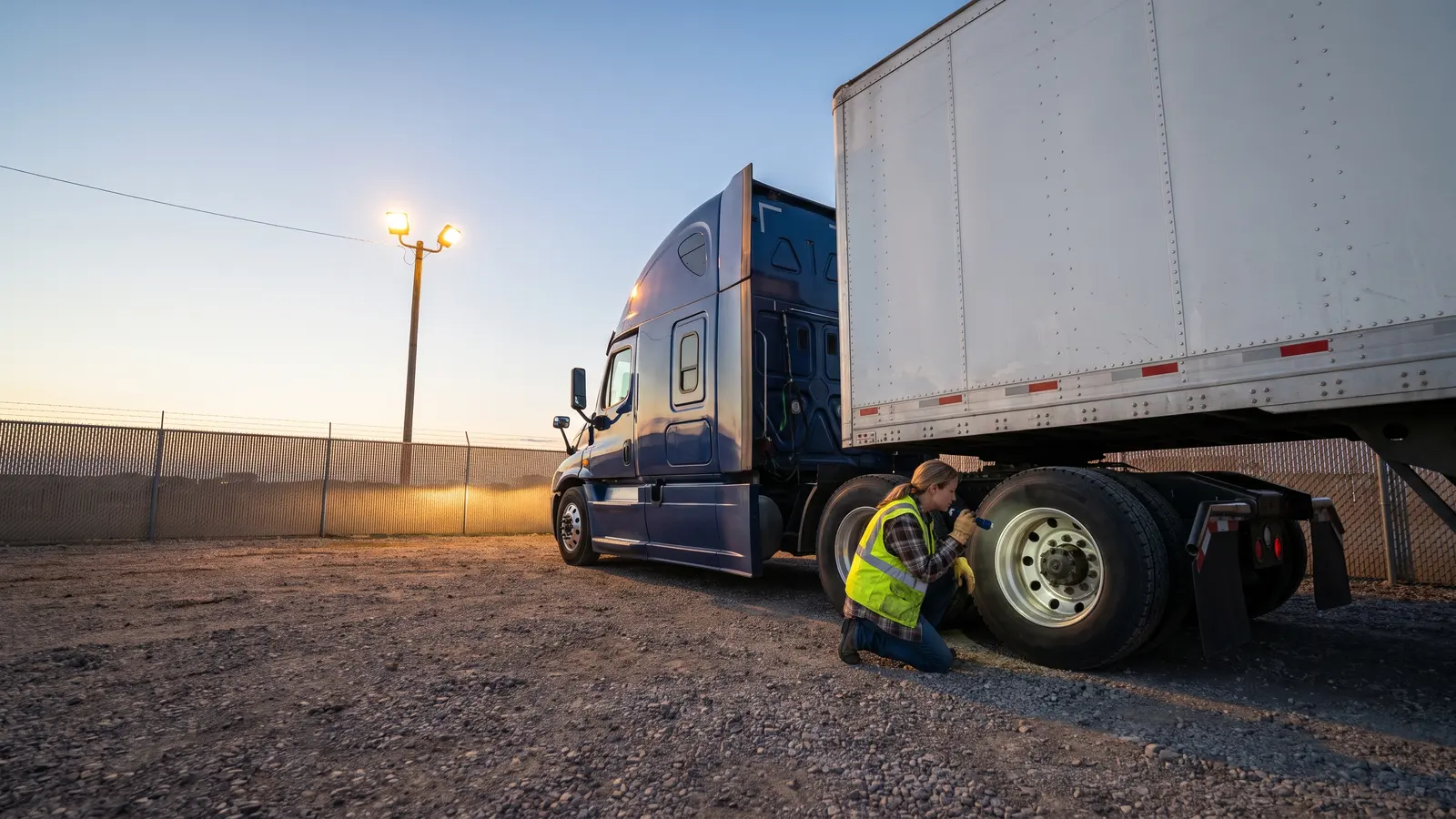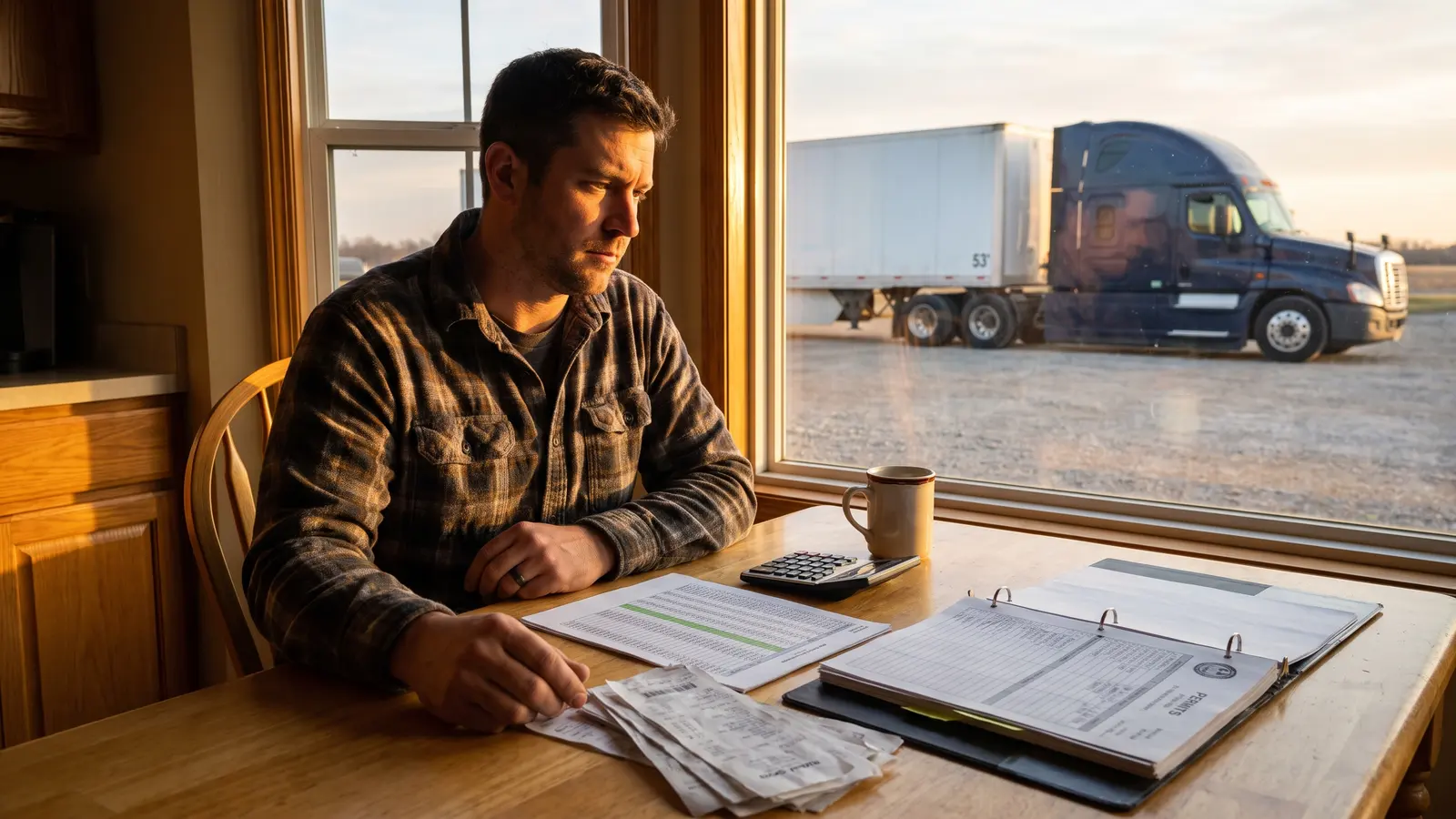

Before you start a trucking company, learn how the business works and the order things happen in, then spend your money. Set up the company, research the freight in your state, and plan your equipment, drivers and back office before you buy a truck. Most new trucking companies that fail in the first year fail because the owner didn't know the first steps, and a wrong first purchase is hard to take back.
That's why we built the Logistical Developmental Program. It's three months of one-on-one consulting with Logistical Forwarding Solutions (LFS), and it's the first step to working with us. This article walks through what to do first, why so many new owners don't make it, and how the program works.
What should you do before you start a trucking company?
Learn first, then spend. Decide what you're building, research the freight where you live, and plan the company in the right order before any big money leaves your account.

Here's a prime example. Rosa is made up for training, but we talk to people like her all the time. She's saved money for years, and she wants to start Cedar Ridge Transport with one 53' dry van out of Memphis. A dry van is the enclosed box trailer that hauls most everyday freight. A company that owns trucks and moves freight for other people is called a carrier, so Rosa wants to be a carrier.
Rosa's first move is the one we see most. She finds a truck and trailer she likes and puts her savings into them. Then the questions start. She doesn't have her authority yet. Operating authority is the federal registration a trucking company needs before it can haul most kinds of freight for other people, for pay. The FMCSA (Federal Motor Carrier Safety Administration) usually identifies it with an MC number. Her insurance quote comes back higher than she planned. She doesn't know which freight moves out of Memphis on a dry van, or who's going to drive the truck if she isn't. The truck sits, and the bills keep coming.
Now run it in a better order. Rosa decides what she's building. She sets up the company and gets her filings done in the right order. She gets insurance quotes before she picks equipment. She researches the freight in her state, so she knows what her truck should haul and where. She plans who drives and how the back office runs. Then she buys the truck that fits the freight. It's the same savings, spent in an order that holds up.
The filings themselves are listed step by step in our guide on how to start a trucking company. This article is about the part that comes before the paperwork: deciding and preparing.
How do you write a trucking business plan?
Start with the freight, not the truck. Write down what you plan to haul, where you'll run, what equipment that freight needs, who drives, and who handles dispatch, billing and compliance.
A plan for a one-truck company can fit on a few pages. For Rosa, it answers five questions:
- The freight: what moves out of Memphis on a dry van, and who ships it.
- The lanes: where the truck goes and how it gets back.
- The equipment: the truck and trailer that fit that freight.
- The people: who drives, who dispatches, and who does the billing and compliance.
- The money: a startup budget built from real quotes, plus cash to run until customers pay.
For the money part, our breakdown of trucking startup costs walks through the numbers, from filing fees to insurance to operating cash.
Why do most new trucking companies fail in the first year?
Most fail because nobody showed the owner the first steps. Driving a truck and finding a load are real skills, but running the company is a separate job.
Factoring companies will tell you, and we've seen it ourselves: about 98% of the people who get into this business don't make it through the first year. A factoring company pays a carrier for its invoices right away and collects from the customer later, for a fee. They work with a lot of new carriers, so they see how the first year in trucking goes.
Now here's the thing. A license is not a business. Getting your authority means the government lets you haul freight for hire. It doesn't tell you what to haul, what to charge, how to keep cash coming in between loads, or how to keep your driver files in order. That's the compliance, cash, insurance and paperwork side of the company, and it's where new owners get caught.
The money usually gets spent before the knowledge shows up. We want to flip that order.
What is the Logistical Developmental Program?
The Logistical Developmental Program is LFS's consulting program and the first step to working with us. It's three months of one-on-one consulting, with us working with you every week.
It's also the handshake. Before we build anything together, we get to know you and you get to know us. Anyone who places equipment with LFS goes through the program first. You can watch the 2-minute video on the Logistical Developmental Program page to hear how it works.
A network comes with it: real people, real deals. Thousands of Freight University students learn the business and do freight research every day. That gives LFS market knowledge, consistent freight and relationships with shippers, brokers, carriers and dispatchers. A shipper is the company that has the freight. A broker arranges the move between the shipper and the carrier. A dispatcher finds and books loads for a carrier's trucks. Inside the network, one member's truck can run with another member's trailer, so the money goes where it should: to the truck.
LFS is a carrier-first company, and freight research never stops. You can read how we do it on our page about freight research.
Who is the program for?
It's for beginners who have money saved, haven't spent it yet, and want to start a trucking business the right way or build a logistics business of their own. We work with four kinds of builders.
| Builder | What you want to build | Read more |
|---|---|---|
| Trucking company builder | Your own trucking company, with your own authority and trucks | Start a trucking company |
| Freight brokerage builder | A brokerage that arranges freight between shippers and carriers | How to start a freight brokerage |
| Investor | A truck you invest in and place with a team that manages it | Investing in trucking |
| Individual builder | A logistics business of your own, like dispatching | Consulting |
Dispatching and brokering are two different jobs, and the program treats them that way. A dispatcher works for the carrier. A broker sits between the shipper and the carrier.
We're selective, and paying doesn't buy a spot. We talk first.
What happens in the three months?
We work with you every week, one-on-one, and build the business in order. Here's what the consulting covers.
- Setting up the company: the entity (the legal business itself), your authority, filings in the right order, insurance quotes and permits.
- Finding the right industry: freight research in your state, so you know what moves where you are before you choose equipment.
- Equipment: what to buy before the money is spent, and how equipment can be placed with a team that manages it.
- Drivers: finding, screening and onboarding drivers, and building driver qualification files, the records a carrier keeps on each driver.
- The management side: dispatch, back office and compliance. The back office is the billing, records and paperwork that keep a truck paid and legal.
Members are also welcome to join the PLSP live sessions at Freight University. PLSP stands for Professional Logistics Service Provider, and the live sessions are virtual and weekly. The PLSP online course is free at Freight University, and you can read more on our PLSP program page.
Here's the limit. The program teaches and guides, and you do the building. We don't promise earnings. What a business earns depends on the work, the freight and the market.
What does the program cost?
The Logistical Developmental Program is a one-time fee of $750. If you're not satisfied, you can ask for a refund within 7 days. After 7 days, the fee is non-refundable.
We put it this way: "$750 is a lot cheaper than $100,000." That's comparing the fee with what people spend building a logistics business. Learn first, then spend.
How do I set up a consulting call?
Book the free 30-minute consulting call, or fill out the form on the program page. The call is a phone call, not video, on weekday mornings or evenings, Eastern Time.
We call the U.S. phone number you give us. Come with what you want to build, the state you're in, and your questions. If you'd rather write first, the form on the Logistical Developmental Program page is titled "Join the program, or ask us about it."
Where to go next
If you've saved money and haven't spent it yet, start here.
- Watch the 2-minute video on the Logistical Developmental Program page.
- Book the free 30-minute consulting call.
- Fill out the form on the program page if you'd rather ask a question first.
While you wait for the call, read The Art of the Deal With 10 Wheels free in the Freight University library, or listen to the audiobook on YouTube. It's about building a freight business where the deal keeps turning after the load is delivered.
Sources
Questions and answers
What should I do before I start a trucking company?
Learn how the business works and the order things happen in before you spend your savings. Set up the company, research the freight in your state, and plan equipment, drivers and the back office. Then buy the truck that fits the freight.
Can you start a trucking company with one truck?
Yes. Many carriers start with one truck. Before you do, decide who drives it, research the freight it will haul, and plan for repairs, downtime and the weeks before customers pay.
What do you need to start a trucking business?
You need a business set up in your state, the federal registrations for the freight you'll haul, insurance, and the equipment and drivers to run it. The filings depend on what you haul and where you run, and our step-by-step guide on starting a trucking company lists them in order.
Is the Logistical Developmental Program a course?
No. It's three months of one-on-one consulting with Logistical Forwarding Solutions, working with you every week on your own business. If you want a course, the PLSP online course at Freight University is free.
How much does the Logistical Developmental Program cost?
It's a one-time fee of $750. You can ask for a refund within 7 days if you're not satisfied. After 7 days, the fee is non-refundable.
Can I just pay the fee and join?
No. LFS is selective, and paying doesn't buy a spot. We talk with you first, and the free 30-minute consulting call is the easiest way to start that conversation.
Do I have to go through the program to place a truck with LFS?
Yes. Anyone who places equipment with LFS goes through the Logistical Developmental Program first, so we know each other before we build anything together.
Will the program tell me how much my trucking company will earn?
No. LFS doesn't promise earnings. What a trucking or logistics business earns depends on the work, the freight and the market.
Logistical Forwarding Solutions. A carrier-first company.